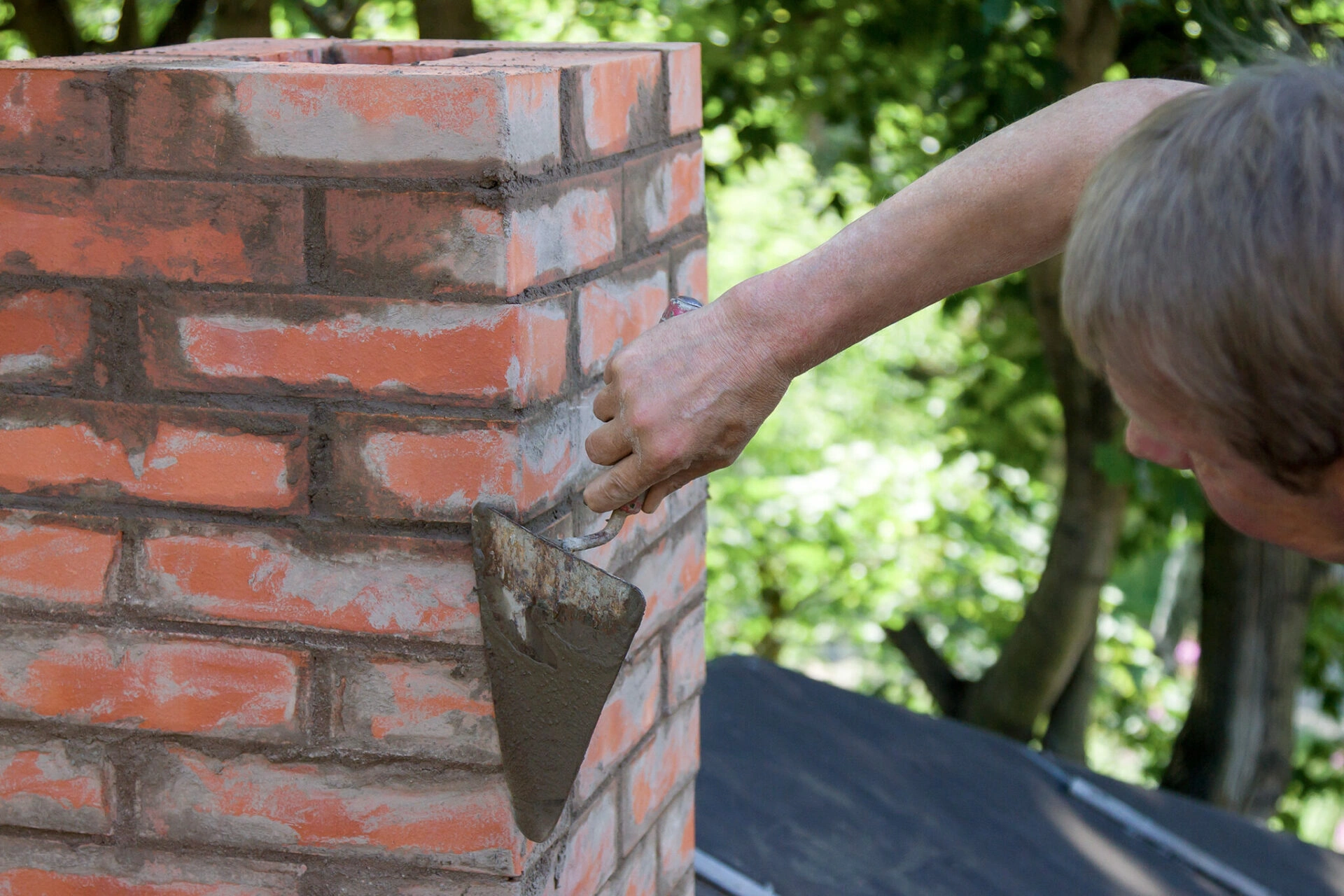
The answer to what masonry is: Masonry is the building craft of constructing structures from individual units such as brick, stone, or concrete block bonded together with mortar. It is valued for being strong, non-combustible, and long-lasting, which is why it is used for chimneys, fireplaces, and exterior walls.
Masonry surrounds you at home. Your chimney, fireplace, and brick walls are all masonry. Knowing what masonry is helps you spot small problems early, before they turn into costly repairs.
What Is Masonry, Exactly?
Masonry is the craft of building structures by stacking individual units and bonding them with mortar. Those units are usually brick, stone, or concrete block. The mortar is the paste that holds everything in place and seals out water.
So what does a masonry contractor do? In short, a mason builds and repairs anything made from these bonded units. Common masonry projects include:
- Chimneys the most common masonry feature in a home
- Fireplaces and fireboxes
- Brick and stone exterior walls
- Retaining walls, steps, patios, and walkways
- Foundations and structural supports
A skilled mason does more than stack bricks. They mix the right mortar, match existing materials, and meet safety codes. Good masonry can last 100 years or more. Poor masonry can fail in a single winter.
Is Concrete Considered Masonry?
This is a common question, and the answer depends on the form. Poured concrete is not masonry. It is a single solid mass poured into a mold, with no separate units and no mortar joints.
Concrete block, however, is masonry. A concrete masonry unit (a CMU, or “cinder block”) is a pre-made unit laid in courses and bonded with mortar, exactly like brick or stone. So the same material can be masonry or not, depending on how it is used.
The Main Types of Masonry Materials
Every masonry project starts with the right material. Here are the four you will see most often on a home:
Brick. Fired clay units are known for their strength and long life. Brick handles heat well, so it is common in chimneys and fireplaces.
Stone. Natural and extremely durable. Stone masonry adds value and a timeless look, but it takes more skill to install and repair.
Concrete block (CMU). Strong, affordable, and fast to lay. Often used for foundations, walls, and structural cores.
Mortar. The “glue” between every unit is made from cement, lime, sand, and water. Too hard, and it cracks the brick; too soft, and it crumbles.
Mortar wears out first. Bricks can last a century, but the mortar joints between them usually need attention long before that.
Wet vs. Dry Masonry: What Distinguishes Dry Masonry Construction?
There are two broad ways to build with masonry units, and the difference is simple. Wet masonry uses mortar to bind the units together. This is the method behind almost every modern brick wall, chimney, and fireplace. The mortar locks everything into one solid structure.
Dry masonry uses no mortar at all. What distinguishes dry masonry construction is that the units are held in place by their own weight, shape, and friction. You see this in dry-stacked stone walls and garden borders. It relies on careful fitting rather than adhesive.
For a home chimney or fireplace, wet masonry is the standard. The mortar is essential for both strength and for sealing out the elements.
Why Masonry Is Non-Combustible (and Why That Matters)
Here is a feature that protects your family every day: masonry is non-combustible. Brick, stone, concrete block, and proper mortar do not catch fire or burn.
That is exactly why masonry is the material of choice around heat sources. Your firebox, chimney liner, and the wall behind your stove are built from non-combustible masonry for one reason: to safely contain extreme heat and keep it away from the wood framing of your house.
But there is a catch. Masonry is only non-combustible when it is intact. Cracked mortar joints, gaps in a firebox, or a damaged crown create paths for heat and embers to escape. That is why a yearly chimney inspection matters so much for homes across Newnan and the greater Atlanta area.
What Is Parging in Masonry?
Parging is a thin coat of mortar applied over a masonry surface to smooth and protect it. Think of it as a protective skim layer.
In chimneys, parging is most often used on the smoke chamber, the area just above the firebox. A rough, uneven smoke chamber slows airflow and lets creosote build up faster. A smooth parged surface helps smoke rise cleanly and reduces fire hazards.
Parging is also used on foundation walls and exposed block to seal against moisture. Over time, it can crack or flake off, especially where water gets behind it. When that happens, a professional should repair it so the protective layer keeps working.
The Most Common Masonry Problem Homeowners Face
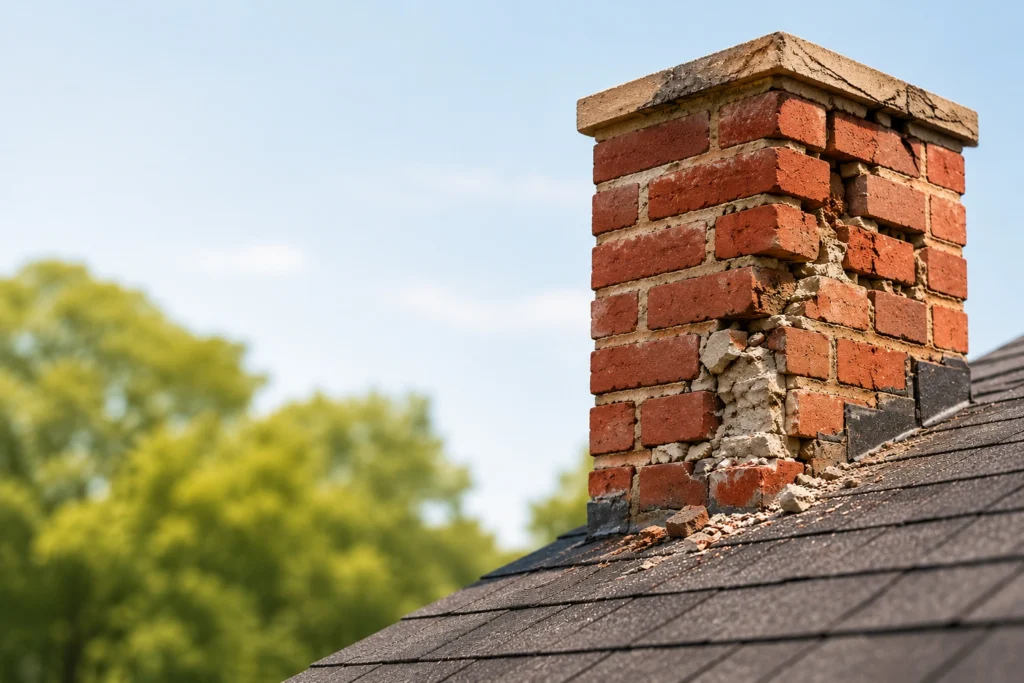
If you remember one thing from this guide, make it this: water is the enemy of masonry. Healthy masonry sheds water. But once mortar joints crack, water gets inside. In Georgia, our freeze-and-thaw cycles make this worse. Water seeps into tiny cracks, freezes, expands, and pushes the masonry apart. Each cycle does a little more damage.
Warning signs to watch for:
- Crumbling or missing mortar between bricks
- Spalling when the face of a brick flakes, pops, or peels off
- White, chalky stains (efflorescence) that signal water movement
- Cracks running through the bricks or mortar joints
- A leaning chimney or gaps where the chimney meets the roof
The fix for failing mortar is tuckpointing (also called repointing). A mason grinds out the old, damaged mortar and packs in fresh mortar. Done early, it is a straightforward repair. Ignored, it spreads until a full rebuild is the only option, and that costs far more.
A Quick Word on “Masonry Bees”
Homeowners sometimes spot small bees near their brick walls and search for how to remove masonry bees. Let’s clear up the confusion.
What is a masonry bee? A masonry bee, also called a mason or mortar bee, is a solitary bee. Unlike honeybees, they do not live in colonies. So if you are wondering, do masonry bees make honey, the answer is no. They are usually harmless and are good pollinators.
Here is the masonry connection: these bees burrow into soft, deteriorating mortar and create small holes in the joints. They do not chew through healthy, solid mortar; they target joints that are already weak. So if masonry bees are nesting in your wall, it is a sign that the mortar has started to break down.
How do you remove masonry bees for good? Not with sprays. The lasting fix is to repoint the soft, perished mortar, because the bees can only burrow into weak material. Affected joints are cleaned out to a depth of about 15 mm and repointed, ideally in late summer or autumn. The same tuckpointing that fixes water damage also solves a masonry bee problem at the root.
Masonry Repair Costs & Comparison
Every job is different, but the table below sets general expectations. Figures are typical U.S. ranges and depend on a professional inspection. Tuckpointing is usually the best-value option because it stops damage early.
Service | Typical Cost (U.S.) | What It Addresses | Best For |
Tuckpointing / Repointing (Best Value) | $5–$25 per sq. ft. | Crumbling or cracked mortar joints; masonry bee prevention | Early-stage mortar wear |
A few hundred up to $2,000+ | Cracked or spalling chimney crown | Water enters at the top | |
Brick Spalling Replacement | Varies by brick count | Flaking or popped brick faces | Localized surface damage |
Full Chimney Rebuild | Highest cost (often several $1,000s) | Severe structural failure or leaning | Neglected chimneys |
Archer Chimneys & Exteriors' published inspection pricing (a smart first step before any repair):
Inspection | Price |
$149.99 | |
Level 2 Camera Chimney Inspection | $199.99 |
Level 2 Inspection with Sweep & Camera | $299.99 |
The smartest money you can spend is on an inspection, which tells you exactly what you are dealing with before small problems become big ones.
Why Choose Archer Chimneys & Exteriors
Archer Chimneys & Exteriors is a licensed, insured, family-owned chimney and exterior services company. We are based in Newnan, GA, and serve homeowners throughout Coweta County, Marietta, and Asheville, NC.
Here is what separates us from general contractors and national chains:
- Full leak diagnosis. We assess every potential entry point on every visit. You get a complete diagnosis, not a partial fix.
- Level 2 video camera inspections: We inspect the interior of your flue from crown to firebox. We identify damage that is invisible from the outside.
- Chimney and roofing expertise combined: Since chimney leaks often involve both the chimney and the roof, our dual expertise removes the guesswork about where the water originates.
- Licensed and insured: We carry full licensing and liability coverage across all service areas.
- 279+ verified Google reviews: Our reputation is built on honest inspections and accurate repairs for homeowners throughout the Newnan area.
- Inspection fee applied to repairs: Your inspection fee counts toward any repair or service within 30 days. You are paying for real answers
Conclusion
Masonry is the quiet workhorse of your home. It holds up your chimney, protects your family from fire, and shapes your curb appeal. Now you know what masonry is, the materials behind it, why it must stay non-combustible, and the warning signs that mean it needs attention.
The most important takeaway is simple: catch masonry problems early. A small crack today is a quick repair. The same crack ignored for a few winters becomes a major rebuild.
For more updates, expert tips, and customer reviews, follow us on Facebook and Instagram, or visit our Google My Business to see why homeowners trust us.
Contact us today to schedule your inspection or get a free quote.
Frequently Asked Questions
What is masonry?
Masonry is the craft of building structures from individual units of brick, stone, or concrete block bonded together with mortar. It is strong, non-combustible, and long-lasting, which makes it ideal for chimneys, fireplaces, and exterior walls.
What does a masonry contractor do?
A masonry contractor builds and repairs anything made from bonded units, including chimneys, fireplaces, brick and stone walls, patios, and retaining walls. They also mix the correct mortar, match existing materials, and ensure the work meets safety codes.
Is concrete considered masonry?
It depends on the form. Poured concrete is not masonry because it is one solid mass with no joints. Concrete block (CMU), however, is masonry because it is laid in units and bonded with mortar like brick or stone.
What distinguishes dry masonry construction from wet masonry?
Dry masonry uses no mortar; units are held by their own weight, shape, and friction, as in dry-stacked stone walls. Wet masonry binds units with mortar and is the standard for chimneys, fireplaces, and most modern walls.
Why is masonry non-combustible?
Brick, stone, concrete block, and proper mortar do not catch fire or burn. This is why masonry is used around heat sources like fireboxes and chimneys. It is only non-combustible when intact, so cracks or gaps must be repaired promptly.