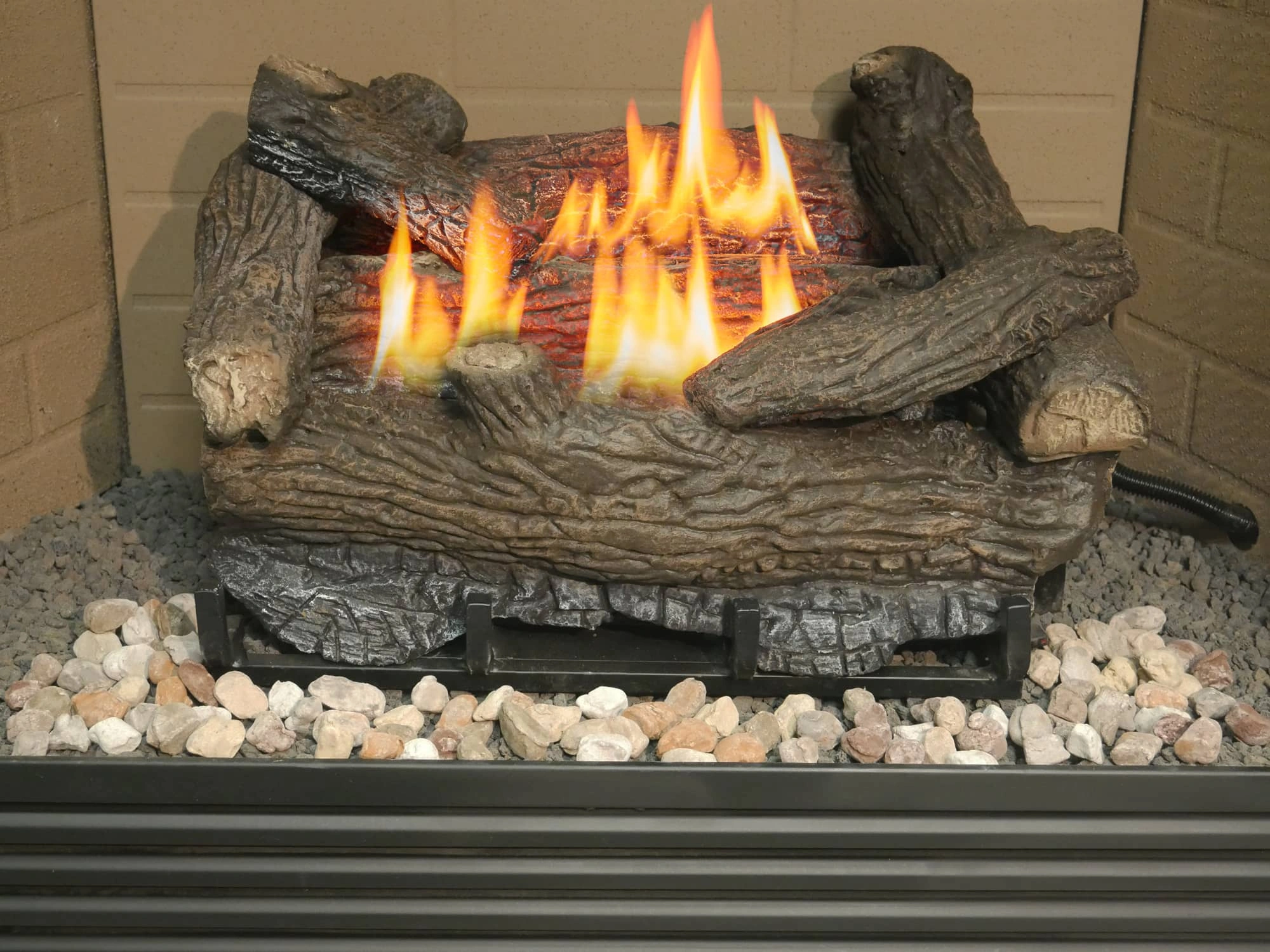
To light a gas fireplace with a pilot light, turn the control knob to Pilot, then press it in. Hold the igniter button until you see a small blue flame. Then keep holding the knob for 30 to 60 seconds before releasing and turning it to On.
Learning how to light a gas fireplace is simpler than it looks, once you know your ignition system. This guide walks you through every step safely for homes across Newnan, Marietta, and Asheville. You will also learn how to turn it on, start it for the season, and relight a stubborn pilot.
How to Light a Gas Fireplace: Know Your Ignition System First
Before you light a gas fireplace, identify which ignition system you have. The steps are different for each type. Using the wrong instructions is the top reason homeowners get stuck.
Standing Pilot Systems
This is the oldest, most common style in homes built before the mid-2000s. A small pilot flame burns continuously, even when the fireplace is off. You light it using a knob marked Off, Pilot, and On.
Intermittent Pilot Ignition (IPI) Systems
Newer fireplaces skip the always-on pilot. Pressing the remote sparks the pilot, then the main burner ignites seconds later. These systems are more fuel-efficient and rarely need manual relighting.
Millivolt Remote Systems
A millivolt system uses a battery-powered remote to signal the gas valve. Dead batteries in the remote or receiver are a common false alarm. Always check both before assuming a bigger problem.
Safety Check Before You Light a Gas Fireplace
Knowing how to light a gas fireplace starts with a quick safety check. Run through this list every time, even with a familiar fireplace.
- Smell test first. If you smell gas, stop and ventilate immediately. Call a professional before doing anything else.
- Check the glass front. It should be fully seated, latched, and free of cracks.
- Clear the firebox area. Remove decorations, dust, or stored items first.
- Confirm the damper is open if your unit has one.
- Know your main gas shutoff location before you start.
How to Light a Gas Fireplace with a Pilot Light
Follow these steps in order if your unit has a standing pilot. Do not skip ahead, even if a step feels unnecessary.
- Turn the fireplace off and wait 5 minutes before starting.
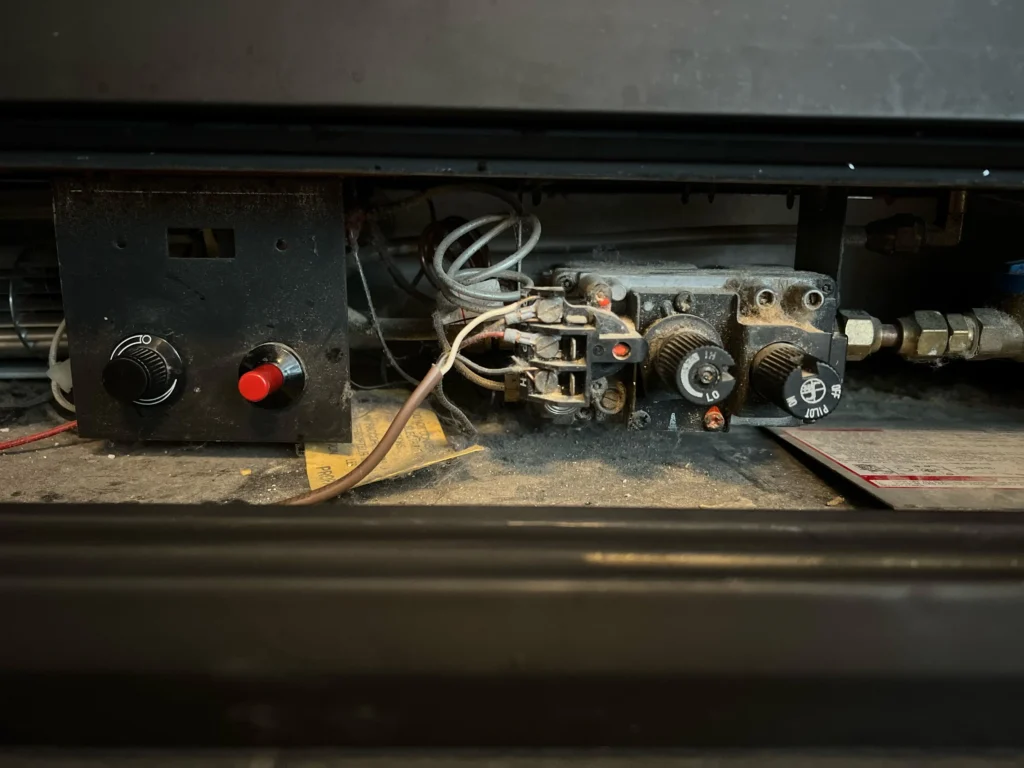
- Remove the access panel to expose the control valve.
- Find the knob marked Off, Pilot, and On.
- Turn the knob to Pilot and press it in.
- Press the igniter until you see a small blue spark.
- Hold the knob in for 30 to 60 seconds after it lights.
- Release slowly and watch the pilot stay lit on its own.
- Turn the knob to On, then replace the access panel.
How to Turn On a Gas Fireplace Once It Is Lit
Once you know how to light a gas fireplace, turning it on daily is simple. The exact method depends on your system.
- Remote control: press On. Most systems respond within seconds.
- Wall switch: flip it to On for direct vent installs.
- Manual knob: turn to On once the pilot holds steady.
How to Start a Gas Fireplace After Months in Storage
Now that you know how to light a gas fireplace, the first burn each season needs extra care. Use this checklist before lighting it on the first cold night.
- Check that gas logs have not shifted out of position.
- Expect a faint dust odor for the first 15 minutes.
- Crack a window during the first burn of the season.
- If the odor does not fade, shut off and call a professional.
- Schedule an annual inspection before the season’s first light.
How to Relight a Pilot Light on a Gas Fireplace
Even after you learn how to light a gas fireplace, the pilot can go out again. If it lights but will not stay lit, one of these is usually the cause.
- A draft inside the firebox from a loose glass door or chimney downdraft.
- A dirty or misaligned pilot assembly is blocking the flame.
- A weak thermocouple is the most commonly replaced part.
- Low or fluctuating gas pressure from a drifting regulator.
- A built-in 7-day safety timer on some standing pilot units.
If the pilot will not hold after three honest attempts, stop. That points to a thermocouple, pressure, or valve issue needing a professional.
Does a Gas Fireplace Need a Chimney?
Not always. It depends on which venting type your unit uses.
Vented Gas Logs
These rely on an existing masonry chimney and open damper. This is common in older brick homes around Marietta and Newnan.
Direct Vent Fireplaces
Direct vent units use sealed combustion through a dedicated wall or roof pipe. No traditional chimney is required for this type.
Vent-Free (Ventless) Gas Logs
Ventless units burn room air and need no chimney at all. They rely on an oxygen depletion sensor for safety and work best as supplemental heat.
How to Clean Gas Fireplace Glass
Clean the gas fireplace glass carefully to avoid streaks or damage.
- Let it cool for at least an hour first.
- Release the glass panel using the manufacturer’s latch system.
- Dry-dust first with a microfiber cloth before adding any liquid.
- Use only an ammonia-free fireplace glass cleaner.
- Watch for white film that will not wipe off, a sign of overheating.
When to Call a Professional Instead of DIY
Even once you know how to light a gas fireplace, some problems need a professional.
- You smell gas at any point during the process.
- The pilot will not hold after three attempts.
- The flame burns yellow or produces visible soot.
- Glass haze will not clean off with a proper cleaner.
- You hear popping or whistling near the valve.
- It has been over 12 months since your last inspection.
Gas Fireplace Repair Cost in Georgia and North Carolina
Here is what homeowners across Newnan, Marietta, and Asheville typically pay for common repairs.
- Level 1 diagnostic inspection: around $149 to $200.
- Thermocouple replacement: typically $150 to $300, including labor.
- Gas valve replacement: typically $300 to $600.
- Gas pressure test and adjustment: often applied toward repair.
- Full gas log set replacement: several hundred to low thousands.
Cost depends on unit age, brand, accessibility, and venting type. Most issues cost far less when caught during a routine inspection.
Why Choose Archer Chimneys & Exteriors
Archer Chimneys & Exteriors is a licensed, insured, family-owned chimney and exterior services company. We are based in Newnan, GA, and serve homeowners throughout Coweta County, Marietta, and Asheville, NC.
Here is what separates us from general contractors and national chains:
- Full leak diagnosis. We assess every potential entry point on every visit. You get a complete diagnosis, not a partial fix.
- Level 2 video camera inspections: We inspect the interior of your flue from crown to firebox. We identify damage that is invisible from the outside.
- Chimney and roofing expertise combined: Since chimney leaks often involve both the chimney and the roof, our dual expertise removes the guesswork about where the water originates.
- Licensed and insured: We carry full licensing and liability coverage across all service areas.
- 279+ verified Google reviews: Our reputation is built on honest inspections and accurate repairs for homeowners throughout the Newnan area.
- Inspection fee applied to repairs: Your inspection fee counts toward any repair or service within 30 days. You are paying for real answers
Conclusion
Now you know how to light a gas fireplace safely, from the first pilot spark to the final flame. Most homeowners in Newnan, Marietta, and Asheville can complete this process in just a few minutes.
For more updates, expert tips, and customer reviews, follow us on Facebook and Instagram, or visit our Google Business Profile to see why homeowners trust us.
Contact us today to schedule your inspection or get a free quote.
Frequently Asked Questions
How do you light a gas fireplace with a pilot light?
Turn the control knob to Pilot and press it in. Hold the igniter button until a small blue flame appears, then keep the knob pressed for 30 to 60 seconds before releasing.
How do you turn on a gas fireplace?
Once the pilot is lit, press On using your remote, flip the wall switch, or turn the manual knob to On. The exact method depends on your ignition system.
How do you start a gas fireplace for the first time each season?
Check that the logs have not shifted, then light the pilot as usual. Expect a faint dust odor for about 15 minutes, and crack a window for ventilation.
How do you relight a pilot light on a gas fireplace?
Turn the knob to Pilot, press it in, and ignite the flame with the igniter or a long lighter. Hold the knob for 30 to 60 seconds before releasing it.
Does a gas fireplace need a chimney?
Not always. Vented gas logs need an existing chimney, while direct vent and vent-free units do not require one. It depends entirely on your specific unit type.