QUICK ANSWER: What chimney service do North Cobb homeowners need?
North Cobb chimney service starts with a yearly inspection, as the NFPA recommends. Sweep the flue when soot reaches one-eighth of an inch. Repair crown, flashing, mortar, or liner damage soon, because Georgia humidity and storms let small leaks grow.
Smoke in the living room or a stain on the ceiling is a bad way to learn your chimney needs help. This North Cobb chimney service guide explains what chimney sweeps, inspections, and repairs really involve. It covers homes in East Cobb, Kennesaw, and Acworth, so you can act before small problems grow.
Why Does Chimney Care Matter in East Cobb, Kennesaw and Acworth?
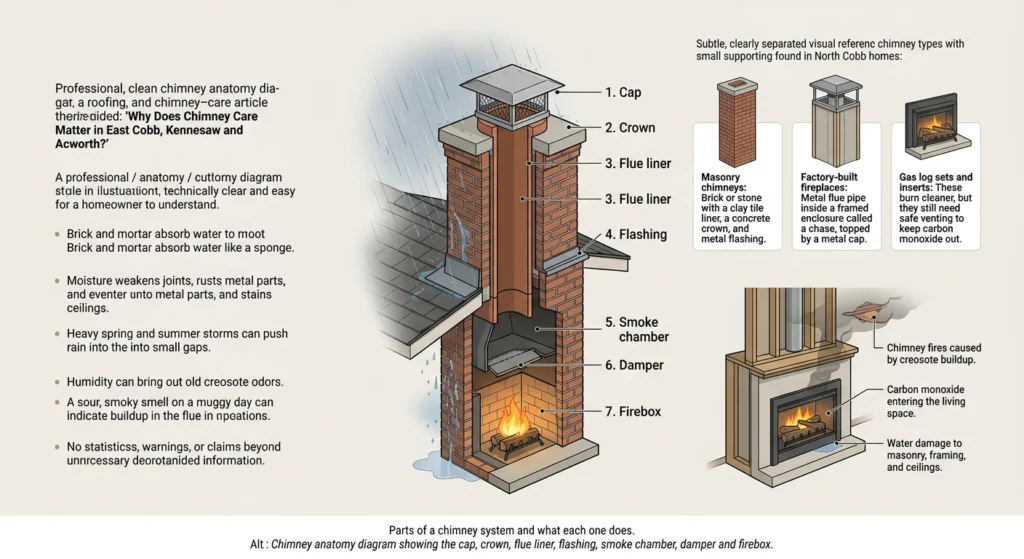
A chimney carries smoke, heat, and gases out of your home. When it fails, you face three risks:
- Chimney fires caused by creosote buildup
- Carbon monoxide entering your living space
- Water damage to masonry, framing, and ceilings
How does Georgia's climate affect your chimney?
Brick and mortar absorb water like a sponge. That moisture weakens joints, rusts metal parts, and stains ceilings. Heavy spring and summer storms then push rain into every small gap.
Humidity also brings out old creosote odors. A sour, smoky smell on a muggy day often means buildup is sitting in your flue.
What types of chimneys do North Cobb homes have?
- Masonry chimneys: Brick or stone with a clay tile liner, a concrete crown, and metal flashing. Mortar and liners wear out over time.
- Factory-built fireplaces: Metal flue pipe inside a framed enclosure called a chase, topped by a metal cap. Rust and failed seals are common trouble spots.
- Gas log sets and inserts: These burn cleaner, but they still need safe venting to keep carbon monoxide out.
What Does a Chimney Sweep in Kennesaw, GA Actually Do?
A sweep removes creosote, soot, and debris from the flue. A good one also inspects the parts that cleaning exposes.
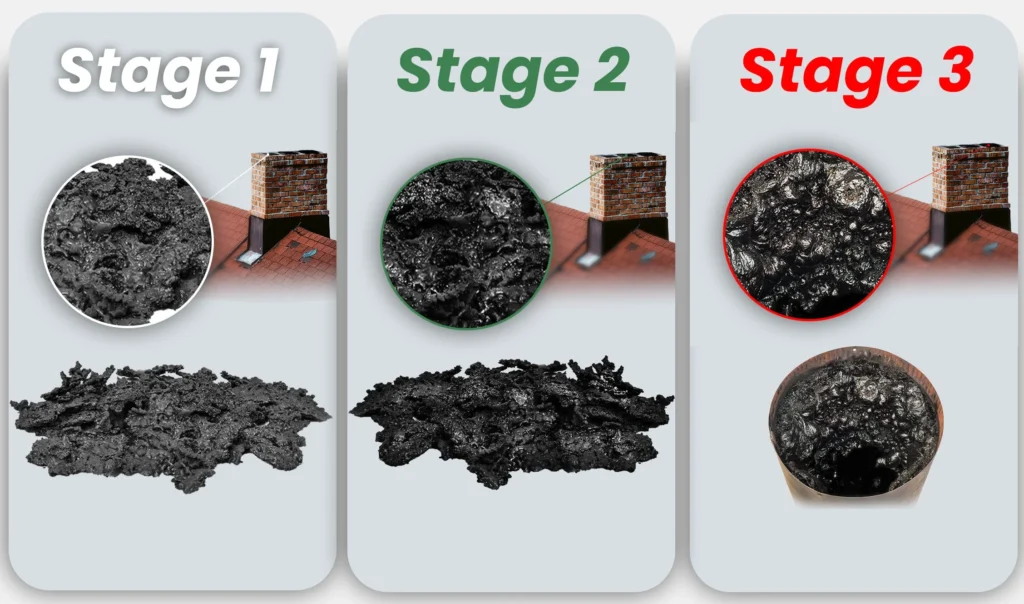
What are the three stages of creosote?
- Stage 1: Light, dusty soot. A standard brush removes it.
- Stage 2: Hard, shiny flakes. It needs stiffer brushes or rotary tools.
- Stage 3: A thick, glazed, tar-like coating. It can ignite in a fire and needs special tools.
The Chimney Safety Institute of America (CSIA) advises sweeping when soot reaches one-eighth of an inch. Any glazed creosote calls for prompt professional action.
How does chimney cleaning in East Cobb work, step by step?
- Protect your home. Drop cloths and a strong vacuum control dust.
- Check the firebox, damper, and smoke chamber. These parts sit closest to the fire.
- Brush the flue. Wire brushes suit clay tile, while poly brushes protect stainless steel liners.
- Vacuum the debris, including the smoke shelf behind the damper.
- Look again with a light or camera. A clean flue can reveal hidden cracks.
- Review the findings with you, including any repairs your chimney needs.
Want the full walkthrough? Read our chimney cleaning process guide or see our Marietta chimney cleaning page.
How often should you sweep a chimney?
- Wood-burning fireplaces: Inspect yearly. Sweep when the inspection shows buildup. Heavy use may call for more.
- Gas fireplaces and logs: Schedule a yearly gas fireplace inspection. Vents can still clog with debris and nests.
- Wood stoves and inserts: Creosote can build quickly, so check them often.
Chimney swifts, small migratory birds, sometimes nest in flues. Federal law protects active nests, so a careful sweep checks first.
Which Chimney Inspection Level Do You Need in North Cobb?
The NFPA recommends inspecting every chimney at least once a year. Its NFPA 211 standard defines three inspection levels. A chimney inspection in North Cobb should match the level to your situation.
- Level 1: A visual check of easy-to-reach parts. It suits a yearly checkup when nothing has changed.
- Level 2: Level 1 plus a video camera scan of the flue and a look at attic and crawl space areas. Use it when you change fuel types, replace an appliance, buy or sell a home, or after a storm or chimney fire.
- Level 3: The deepest level. Technicians may remove parts of the chimney to reach hidden damage. It is used only when a serious hazard is suspected.
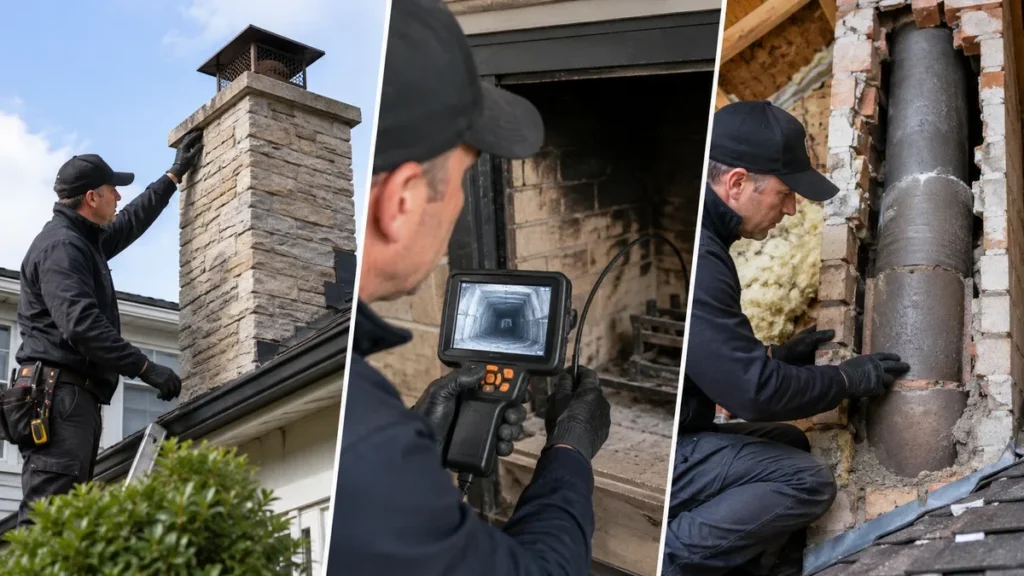
Home buyers in East Cobb and Kennesaw should ask for a Level 2 inspection. A general home inspection typically does not cover the inside of the flue. A camera scan shows what is inside before you close.
What Chimney Repairs Are Common in Acworth, GA?
Chimney repair in Acworth, GA often starts with small damage. Catching it early can keep a minor repair from becoming a rebuild. These are the problems homeowners see most.
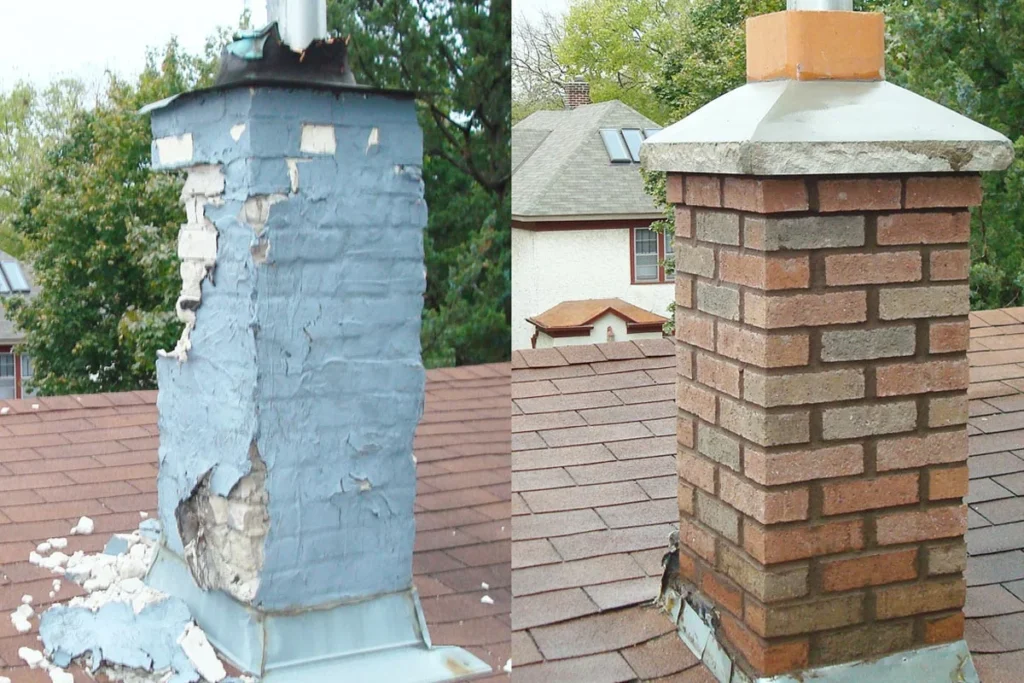
Cracked or crumbling crown
The crown is the sloped slab of concrete or mortar on top of the chimney. It sheds rain away from the brick. Small chimney cracks can be sealed with a flexible coating, but large cracks or missing pieces often mean a new crown.
Failing flashing
Flashing is the metal that seals the joint between the chimney and the roof. Old caulk and tar dry out and split. Lasting repairs use layered step flashing and counterflashing, not just fresh sealant.
Deteriorating mortar joints
Tuckpointing means grinding out loose mortar and filling the joints with new mortar. The new mix should match the old one. Mortar that is too hard can crack older, softer brick.
Spalling brick and white staining
Spalling is when a brick face flakes or peels. White powder on brick is called efflorescence. Both point to moisture moving through the masonry, so the water source must be found and fixed.
Damaged flue liner
The liner protects your home’s framing from heat and keeps gases inside the flue. Clay tile can crack from heat and moisture.
Relining options include a stainless steel liner sized to your appliance or a cast-in-place liner. Changing from wood to gas may also require a new liner.
Missing or rusted chimney cap
A cap keeps out rain, birds, and animals. Its mesh screen also helps stop sparks from reaching your roof.
Waterproofing
A breathable water repellent lets masonry shed rain and still release moisture. Avoid paint-like sealers, which can trap moisture inside brick.
Should you repair or rebuild a chimney?
Repair is usually enough when damage is limited to mortar joints, the crown, or the top few rows of brick. Rebuilding makes sense when the chimney leans, or many bricks are failing. Ask to see photos or video before you approve a rebuild.
What Are the Warning Signs Your Chimney Needs Service?
Call a professional if you notice any of these:
- Smoke or a strong odor coming into the room when you light a fire
- Black, shiny buildup or flaky bits inside the flue or firebox
- Rust on the damper or firebox
- Water stains on the ceiling or walls near the chimney
- White powder, flaking bricks or missing mortar on the outside
- Pieces of clay tile in the firebox
- Noises or droppings that suggest animals or birds
- A chimney that leans or shows visible gaps
What Affects Chimney Service Cost in North Cobb?
Prices depend on your home, so ask for a written estimate that lists exactly what is included. Local cost guides put a standard cleaning and inspection in the Marietta area at about $200 to $400. Repair and rebuild prices vary widely because every chimney is different.
See our guides to chimney inspection costs and chimney repair costs in Georgia.
Main cost factors:
- Height and roof pitch: Tall or steep chimneys need more time, equipment, and safety gear.
- Chimney type: Masonry, factory-built, and gas systems have different needs.
- Creosote level: Stage 3 glaze takes far longer to remove than light soot.
- Access: Tight attics, second-story roofs, and crowded flues add labor.
- Materials: Stainless steel grade, brick type, and mortar match all change the total.
- Add-ons: Camera scans, animal removal, and dryer vent cleaning may be priced separately.
Ways to avoid overpaying:
- Book a yearly inspection so small fixes stay small.
- Ask for photos or video of every problem before you approve work.
- Get a second opinion on any large repair.
- Be careful with prices far below the local range, which can lead to upsells later.
How Do You Choose a Chimney Company in Cobb County?
Good North Cobb chimney service starts with a company you can verify. Use this checklist before you book:
- Ask for proof of insurance and a business license.
- Ask whether technicians hold CSIA certification or similar training.
- Read local reviews that describe specific work, not just star ratings.
- Expect a written estimate that lists the work and the price.
- Expect an inspection that includes the roofline, not just the fireplace.
Watch for these red flags:
- Unsolicited calls or door-to-door offers, especially after storms
- Pressure to decide today
- A “free” inspection followed by a scary, costly diagnosis with no photos
- Cash-only payment or a large upfront deposit
- Discouraging you from getting a second opinion
Why Choose Archer Chimneys & Exteriors
Archer Chimneys & Exteriors is a licensed, insured, family-owned chimney and exterior services company. We are based in Newnan, GA, and serve homeowners throughout Coweta County, Marietta, and Asheville, NC.
Here is what separates us from general contractors and national chains:
- Full leak diagnosis. We assess every potential entry point on every visit. You get a complete diagnosis, not a partial fix.
- Level 2 video camera inspections: We inspect the interior of your flue from the crown to the firebox. We identify damage that is invisible from the outside.
- Chimney and roofing expertise combined: Since chimney leaks often involve both the chimney and the roof, our dual expertise removes the guesswork about where the water originates.
- Licensed and insured: We carry full licensing and liability coverage across all service areas.
- 279+ verified Google reviews: Our reputation is built on honest inspections and accurate repairs for homeowners throughout the Newnan area.
- Inspection fee applied to repairs: Your inspection fee counts toward any repair or service within 30 days. You are paying for real answers.
Conclusion
A safe chimney needs three things: a yearly inspection, a sweep when buildup calls for it, and prompt repairs. Good service also means clear estimates and honest answers.
For more updates, expert tips, and customer reviews, follow us on Facebook and Instagram, or visit our Google My Business to see why homeowners trust us.
Contact us today to schedule your inspection or get a free quote.
Frequently Asked Questions
How often should I have my chimney swept in Kennesaw, GA?
Have it inspected every year, then swept when soot reaches one-eighth of an inch. That is the CSIA guideline. Heavy wood-burning households may need cleaning more than once a season.
How much does chimney cleaning cost in East Cobb?
Local cost guides put a standard cleaning and inspection in the Marietta area at about $200 to $400. Heavy creosote, tall roofs, and camera scans can raise the price. Ask for a written estimate first.
What is a Level 2 chimney inspection?
A Level 2 inspection adds a video camera scan of the flue and a look at attic and crawl space areas. NFPA 211 calls for it when you buy a home, change fuel types, replace an appliance, or after storm or fire damage.
Do I need a chimney inspection before buying a home in North Cobb?
A Level 2 inspection is a smart step. NFPA 211 calls for one when a property changes hands. A general home inspection typically does not cover the inside of the flue.
What causes a chimney to leak?
Common causes include a cracked crown, failed flashing, a missing cap, and worn mortar joints. Georgia storms push water into small gaps. A professional should trace the water source before repairs begin.