
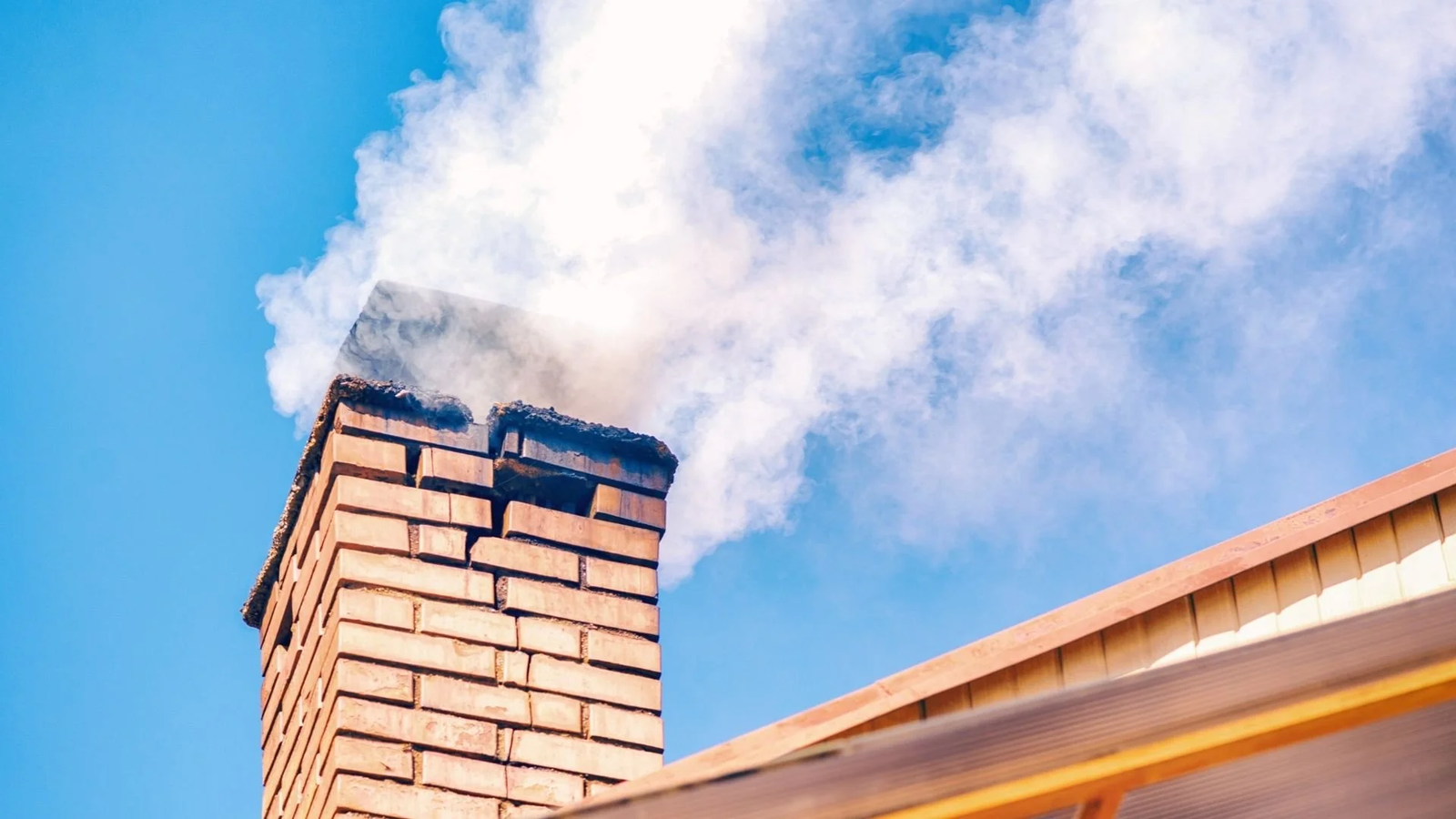
The answer to winter chimney damage in Georgia is: freeze-thaw cycles cause water to enter porous masonry, freeze, expand by 9%, and repeatedly crack the structure from the inside out. The most common results are spalling bricks, chimney crown cracks, deteriorated mortar joints, failed flashing, and damaged liners.
Georgia chimneys do not need extreme cold to fail. Frequent temperature swings between freezing nights and mild daytime conditions create constant expansion and contraction inside the masonry. Over time, this silent process leads to serious structural damage, water intrusion, and safety risks if not identified and repaired early.
KEY TAKEAWAYS
- Georgia chimneys experience 3–5 freeze-thaw cycles per week, more stress than most northern climates
- The five most costly winter damage types are spalling, crown cracks, mortar failure, flashing failure, and liner deterioration
- Early spring is the MOST dangerous season for a winter-damaged chimney. Pre-spring inspection is critical
- Repair costs range from $200 (crown sealing) to $8,000+ (full rebuild), depending on timing and severity
- A $149 inspection today can prevent $3,000–$8,000 in structural repairs later
WHAT IS THE FREEZE-THAW CYCLE AND WHY DOES IT THREATEN CHIMNEYS?
Brick, mortar, and concrete are porous. They absorb water constantly from rain, humidity, morning dew, and melting frost. In Georgia, that exposure continues even through December and January.
Here is exactly what happens inside your chimney with every temperature swing:
- Water is absorbed into tiny pores in the brick and mortar joints
- Temperatures drop below 32°F, water freezes, and expands by roughly 9% in volume
- That expansion forces the material apart from the inside, creating micro-fractures
- Temperatures rise, water thaws and contracts, but the damage remains
- The next freeze cycle penetrates deeper into the now-widened cracks
- The cycle repeats, and each round causes more damage than the last
This is not a gradual process. A single Georgia winter can push a chimney through dozens of these cycles. The cumulative result is serious structural deterioration that creates vulnerability to collapse, water intrusion, and fire hazards.
Why Georgia Is Uniquely Dangerous for Chimney Masonry
Most people assume northern states have the worst chimney damage. In practice, the opposite is often true.
A chimney in Minnesota stays frozen for months. The freeze-thaw cycling is limited. A chimney in Newnan or Marietta experiences temperature swings from the low 20s overnight to the mid-50s during the day, sometimes in the same 24-hour period. That means three to five complete freeze-thaw cycles per week during peak winter months.
Georgia’s high humidity, heavy seasonal rainfall, and expanding clay soils add further stress. The result: Georgia chimneys deteriorate faster than most homeowners expect.
5 TYPES OF WINTER CHIMNEY DAMAGE GEORGIA HOMEOWNERS MUST KNOW
1. Chimney Spalling Bricks
Spalling is among the most visible forms of winter chimney damage. It occurs when moisture trapped inside a brick freezes and forces the outer face to pop, flake, or crumble off.
Signs of chimney spalling bricks:
- Brick fragments or chips on the ground around your chimney base
- Rough, uneven texture where a smooth brick face used to exist
- Large dark patches of exposed inner brick material
- Mortar joints that appear recessed or hollowed
Spalling is not cosmetic. When bricks weaken, they stop supporting surrounding bricks, and the entire structure becomes unstable. Chimney spalling brick repair requires removing damaged bricks, sourcing period-matched replacements, and repointing all surrounding mortar joints to restore structural integrity.
2. Chimney Crown Cracks
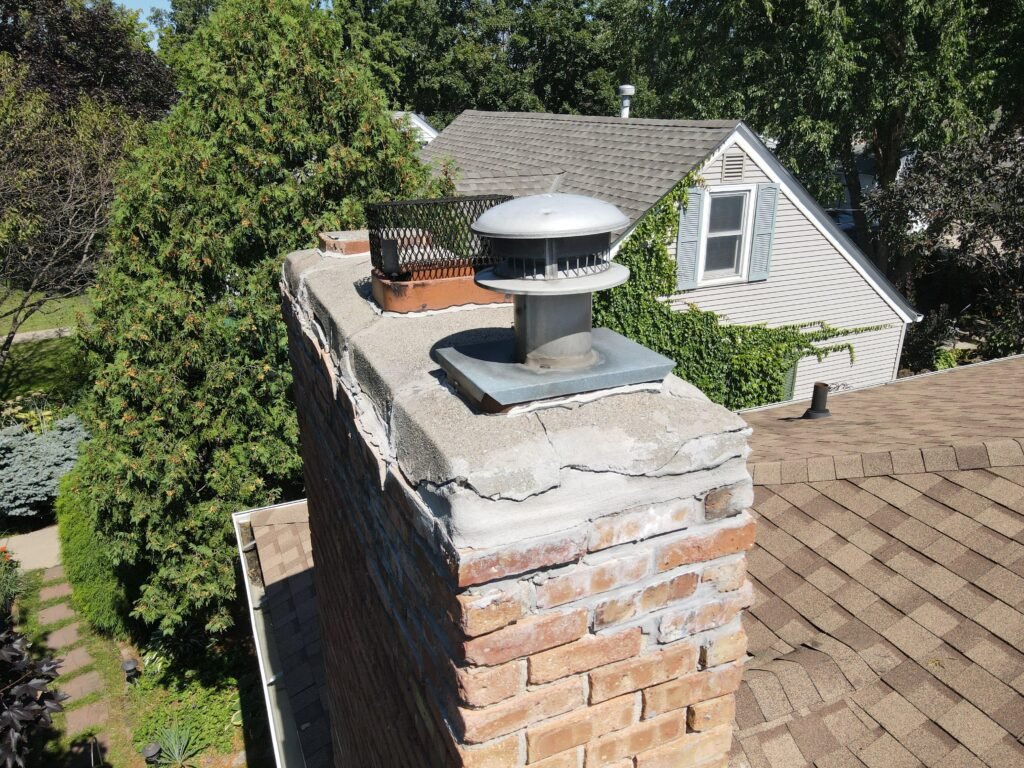
The chimney crown is the concrete or mortar cap that seals the top of the masonry structure around the flue opening. A properly built crown slopes outward with a drip edge overhang directing water away from the chimney, not into it.
Freeze-thaw cycling cracks chimney crowns aggressively. When chimney crown cracks form, water pours directly into the chimney interior. From there, it saturates the brickwork below, accelerates mortar joint failure, and causes rust damage to the damper and smoke chamber.
Treatment depends on crack severity:
- Hairline cracks: Sealed with flexible elastomeric crown coating
- Moderate cracks (coin-width or deeper): Structural patching required
- Severe deterioration or missing sections: Full crown replacement with properly sloped, drip-edge concrete
3. Cracked Chimney Mortar Joints
Mortar is designed to be softer and more porous than brick; it absorbs structural stress, so the bricks don’t have to. That same softness makes it the first material to fail under freeze-thaw pressure.
Signs of cracked chimney mortar joints:
- White powdery staining (efflorescence) on the chimney face a moisture indicator
- Visible gaps or deeply recessed lines between bricks
- Mortar that crumbles or flakes when touched
- Stair-step diagonal crack patterns across the chimney face
The repair is called tuckpointing or repointing. Deteriorated mortar is ground out to a minimum depth of 3/4 inch. New mortar matched precisely to the correct lime-to-sand ratio for the existing material is packed in and tooled to a uniform finish.
CRITICAL: Using a Portland cement-heavy mortar mix that is too hard will accelerate brick damage rather than repair it. This is one of the most common and costly DIY mistakes.
4. Freeze Damage to Chimney Flashing
Chimney flashing is the metal seal, typically aluminum, galvanized steel, or lead, that waterproofs the joint between the chimney and roof. It is anchored partly by mortar packed into the masonry.
When freeze-thaw cycles crack that anchor mortar, the flashing lifts. Water then runs behind it, into the roof deck, and down into the attic or walls. Many homeowners pay for roof leak repairs when the actual source is failed chimney flashing caused by winter masonry deterioration.
Warning signs of flashing failure:
- Water stains on the ceiling near the fireplace
- Rust streaks running down the exterior chimney face
- Visible separation or gaps between metal flashing and masonry
5. Interior Chimney Liner Deterioration
Your chimney liner, clay tile, cast-in-place, or stainless steel protects the surrounding masonry from the extreme heat of combustion gases. Clay tile liners are the most vulnerable to freeze-thaw damage.
When clay tiles absorb water through surface cracks and go through repeated freeze cycles, the tiles crack, buckle, and eventually collapse inward. A compromised liner allows superheated combustion gases and carbon monoxide to leak into the surrounding home structure, a direct fire and carbon monoxide hazard.
This damage is invisible from the outside. Only a Level 2 camera inspection can reveal it. This is why camera inspections are required after any major weather event, sale of a home, or suspected structural damage.
HOW TO SPOT WINTER CHIMNEY DAMAGE: A PRACTICAL CHECKLIST
You do not need to climb your roof to identify most signs of winter damage. Use this checklist from the ground and from inside your home.
From outside, use binoculars from ground level:
- Brick faces popping off or rough flaking texture (spalling)
- Visible cracks at the top of the chimney crown
- White chalky deposits on brickwork (efflorescence active moisture indicator)
- Flashing that appears buckled, lifted, or separated from the masonry
- Recessed or gapped mortar joints between bricks
- Chimney that appears to lean or tilt
From inside your home:
- Water stains on the ceiling or walls near the fireplace
- Rust on the damper, firebox walls, or fireplace doors
- Damp or musty odor from the fireplace, especially during humid weather
- Visible cracks inside the firebox or on the smoke chamber walls
- Brick chips, mortar fragments, or debris falling into the firebox
IMPORTANT: If you observe any of these signs, do not use the fireplace until a certified professional has completed an inspection.
WINTER CHIMNEY REPAIR COSTS IN NEWNAN, MARIETTA & GREATER GEORGIA (2025)
Repair costs vary significantly based on damage type, severity, and how long the problem has been allowed to progress. The table below reflects realistic 2025 pricing in the Newnan, Marietta, and greater Atlanta metro area.
CHIMNEY REPAIR COST TABLE GEORGIA 2025
Repair Type | Cost Range | Best Action Timing |
Chimney crown sealing (hairline) | $200 – $500 | Before spring rains |
Chimney crown replacement | $600 – $1,500 | As soon as cracks appear |
Tuckpointing / mortar repointing | $600 – $1,800 | Late winter / early spring |
Chimney spalling brick repair | $400 – $1,200 | Before further freeze cycles |
Flashing repair or replacement | $300 – $900 | Before spring rains |
Chimney liner repair or relining | $1,500 – $5,000+ | Immediately upon detection |
Full chimney rebuild (above roof) | $3,000 – $8,000+ | Emergency / late-stage damage |
THE TIMING FACTOR: A $300 crown sealing job today becomes a $1,500 crown replacement after one spring rain season. An $800 tuckpointing repair this month becomes a $4,000+ partial rebuild if mortar failure progresses through summer. Early action is always the lower-cost option.
DIY vs. Professional Chimney Repair: Where the Line Is
Some basic tasks are homeowner-appropriate:
- Applying waterproof sealant to sound, undamaged brick
- Installing a chimney cap on an accessible, single-story chimney
- Cleaning the firebox interior
Winter freeze damage repair is not DIY-appropriate in nearly every case. Here is why:
- Mortar selection is technical. The wrong hardness traps moisture and accelerates brick failure. Professionals match the exact lime-to-Portland ratio to the existing masonry.
- Surface cracks often mask more serious structural damage. A professional inspection reveals what is hidden.
- Incorrect repairs void warranty coverage and can complicate homeowner’s insurance claims.
- Chimney masonry work at roof elevation requires specialized equipment and fall protection.
WHY GEORGIA HOMEOWNERS CHOOSE ARCHER CHIMNEYS & EXTERIORS
Archer Chimneys & Exteriors stands out as a trusted and fully licensed company focused on fireplaces, chimneys, and complete home heating solutions. Serving both homeowners and businesses across Newnan, Marietta, and nearby areas, the team is known for delivering safe, reliable, and long-lasting results tailored to each property’s needs.
With extensive hands-on experience, the company has successfully handled a wide range of chimney, fireplace, and heating projects. Their approach is built on professionalism, attention to detail, and a strong commitment to doing every job the right way from start to finish.
The team specializes in creating durable and efficient systems, including gas fireplaces, venting solutions, and chimney repairs that are designed to perform safely for years. Their knowledge allows them to recommend the best options based on each home or commercial setup.
Clients can rely on them for complete services, including installation, replacement, inspection, routine maintenance, and gas line work. Every service is handled with care to ensure both performance and safety remain a top priority.
They proudly work with residential homes, office spaces, and commercial properties throughout Georgia, providing solutions that fit different structures and requirements. No matter the size of the project, the focus remains on delivering consistent quality.
What truly sets them apart is their honest and customer-focused approach. Clear communication, fair recommendations, and transparent pricing help build long-term trust with every client they serve.
All solutions are designed to meet safety standards, improve system efficiency, and enhance overall comfort. By combining expertise with a commitment to quality, Archer Chimneys & Exteriors continues to be a reliable choice for chimney and fireplace services in the region.
CONCLUSION: PROTECT YOUR CHIMNEY BEFORE SPRING RAINS ARRIVE
Winter chimney damage in Georgia moves fast. The freeze-thaw cycles that ran through your masonry every week this winter have already widened cracks, softened mortar, and potentially compromised your crown, flashing, or liner. When spring arrives, and Georgia’s heavy rains follow, every one of those compromised points becomes an entry for water that accelerates damage exponentially.
The time to act is now, before the rains arrive. A single professional inspection can identify every freeze damage issue while repairs are still straightforward and affordable.
For more updates, expert tips, and customer reviews, follow us on Facebook and Instagram, or visit our Google My Business to see why homeowners trust us.
Contact us today to schedule your inspection or get a free quote
FAQs
What is chimney damage from winter, and how does it happen in Georgia?
Winter chimney damage in Georgia results from freeze-thaw cycling. Water absorbs into porous masonry, freezes and expands 9% in volume, then thaws, leaving cracks that deepen with each cycle. Georgia’s fluctuating temperatures create 3–5 cycles per week, making this damage more severe than in colder but more consistently frozen northern climates.
How do freeze-thaw cycles crack a chimney crown?
The chimney crown absorbs moisture through tiny surface pores. When that moisture freezes, it expands and forces the concrete or mortar apart from within. Repeated cycling widens the cracks progressively. Even a hairline crack can become a full structural break within one or two winter seasons if left unsealed.
What does chimney spalling look like, and is it serious?
Chimney spalling appears as brick faces popping off, flaking, or crumbling, often leaving rough dark patches on the chimney exterior. It is serious: spalled bricks no longer support surrounding masonry, and if left untreated, spalling can lead to full structural failure or chimney collapse. Repair involves replacing damaged bricks and repointing all surrounding mortar.
How do I know if my chimney has freeze damage without climbing on the roof?
Use binoculars from ground level. Look for brick faces that are rough, flaking, or missing entirely (spalling), visible cracks at the chimney crown, white chalky staining on the brickwork (efflorescence), and flashing that appears lifted or buckled. Inside, check for water stains near the fireplace, rust on the damper, and debris in the firebox.
How much does chimney freeze damage repair cost in Georgia in 2025?
Costs range from $200 to $500 for minor chimney crown sealing, $600 to $1,800 for tuckpointing and mortar repointing, $400 to $1,200 for partial spalling brick repair, $300 to $900 for flashing repair, and $1,500 to $5,000+ for liner relining. Full structural rebuilds above the roofline typically run $3,000 to $8,000 or more. Repair costs increase significantly the longer damage is left unaddressed.