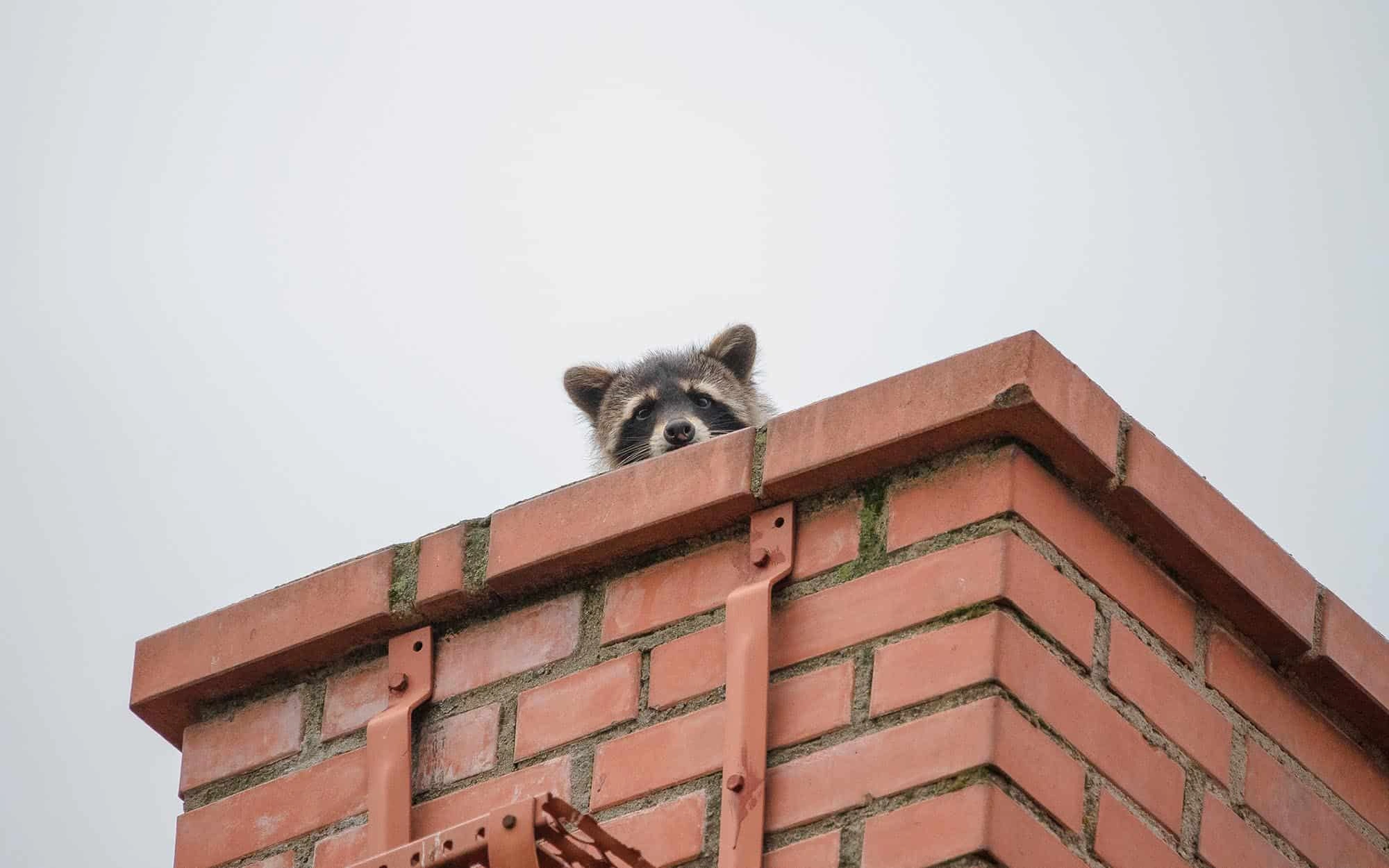
You can tell if an animal is living in your chimney by listening for scratching or scurrying, checking for strong odors, spotting nesting material, and noticing droppings or noise in your chimney at night, especially near dusk and dawn.
A scratching sound at night, a strange odor, or debris in your firebox usually means one thing. An animal is living in your chimney. Here’s how to confirm it and what to do next.
Why Animals Choose Your Chimney
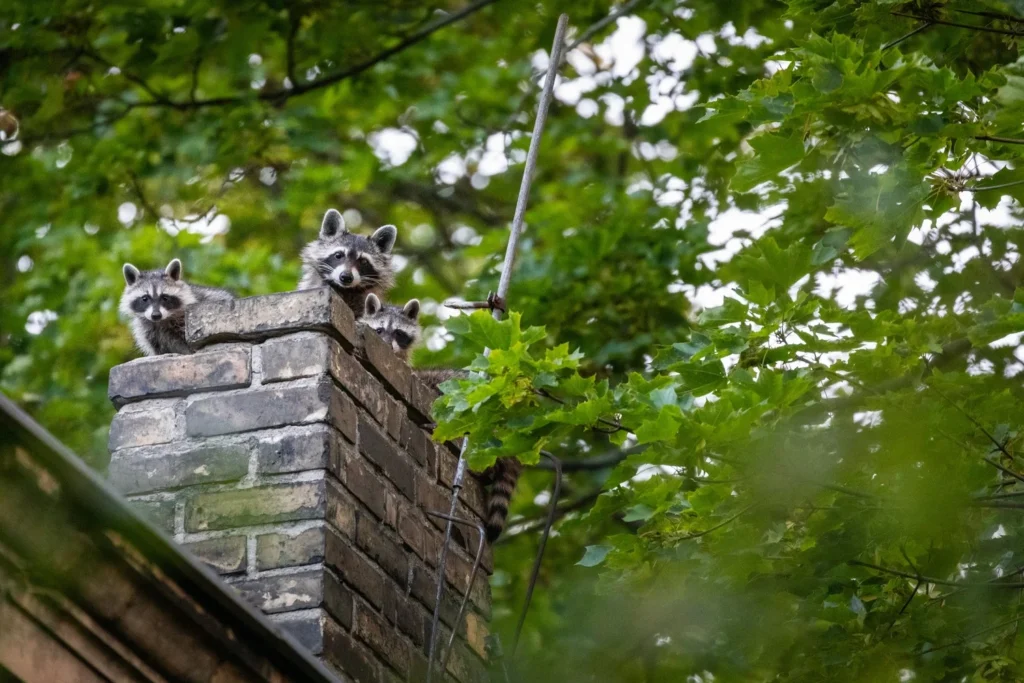
A masonry chimney flue looks like a hollow tree to wildlife. It is dark, warm, and sheltered from wind and predators. Raccoons and squirrels use it as a den site, especially during nesting season. Most animals enter through an uncapped flue, a damaged crown, or a gapped chimney cap.
How to Tell If an Animal Is Living in Your Chimney: 7 Warning Signs
1. Scratching, Scurrying, or Scuffling Sounds
This is the most reported sign among homeowners. It is usually loudest in the early morning or right after sunset. Heavy scratching points to a raccoon or squirrel. Light fluttering suggests a bird.
2. Noise in Your Chimney at Night
Noise in your chimney at night, repeated over several nights, rarely means a one-time visitor. Nocturnal animals, especially raccoons, are most active between dusk and dawn. A nightly pattern is a strong sign of an active nest.
3. Strong or Unusual Odors
Animal urine and droppings create a sharp, musky, or ammonia-like smell. This odor often drifts into your living space when the damper is open. A sudden new smell near your fireplace is a clear warning sign.
4. Visible Nesting Material
Check the firebox with a flashlight and the chimney top from ground level. Twigs, leaves, insulation, and fur point to active nest-building. This material is also a fire hazard if it comes into contact with the heat from the flue liner.
5. Droppings, Staining, or Debris in the Firebox
Small dark droppings near the damper are a clear physical sign. Grease marks near the flue opening suggest regular animal movement.
6. Flies, Mites, or Other Insects Indoors
Nests attract parasites and insects. Unexplained flies or mites near your fireplace often signal a hidden animal problem.
7. Visual Sightings on the Roofline or Chimney Cap
Seeing a raccoon, squirrel, or bird on your chimney crown is a strong signal. This is especially true if the sighting repeats at dusk, near the same spot.
Signs of an Animal in Your Chimney, by Species
Raccoons
Heavy thumping, low growls, and a strong musky odor. Mostly active at night.
Squirrels
Lighter scratching at dawn and dusk, with visible nesting material nearby.
Birds, Including Chimney Swifts
Fluttering or chirping during the day. Chimney swifts are federally protected.
Opossums and Snakes
Less common. Opossums may enter during storms; snakes usually follow prey.
How to Get an Animal Out of Your Chimney Safely
DIY removal carries real risks homeowners often overlook:
- Legal protections: Some species, like chimney swifts, are protected by law.
- Physical risk: Cornered raccoons can bite or scratch and may carry rabies.
- Incomplete removal: DIY methods often miss dependent young in the flue.
- Chimney damage: Improvised trapping can crack flue tiles or damage the damper.
A professional inspection is the safest way to confirm the problem and fix it fully.
What Professional Removal Includes
- Full inspection of the flue, damper, smoke shelf, and firebox.
- Humane removal once any young are old enough to relocate.
- Removal of nesting material, droppings, and debris.
- Installation of a chimney cap or animal guard to block re-entry.
Chimney Animal Removal Cost: What Affects the Price
Chimney animal removal cost depends on a few key factors:
- Species involved: Raccoon removal is typically more involved than bird removal.
- Presence of young: Families need time before safe relocation is possible.
- Chimney height and access: Roof pitch affects labor time and equipment needs.
- Cleanup scope: Heavier nesting material means more cleanup time.
- Prevention: A new chimney cap or animal guard adds to the total cost.
A professional inspection gives you the most accurate price for your specific chimney.
Why Choose Archer Chimneys & Exteriors
Archer Chimneys & Exteriors is a licensed, insured, family-owned chimney and exterior services company. We are based in Newnan, GA, and serve homeowners throughout Coweta County, Marietta, and Asheville, NC.
Here is what separates us from general contractors and national chains:
- Full leak diagnosis. We assess every potential entry point on every visit. You get a complete diagnosis, not a partial fix.
- Level 2 video camera inspections: We inspect the interior of your flue from the crown to the firebox. We identify damage that is invisible from the outside.
- Chimney and roofing expertise combined: Since chimney leaks often involve both the chimney and the roof, our dual expertise removes the guesswork about where the water originates.
- Licensed and insured: We carry full licensing and liability coverage across all service areas.
- 279+ verified Google reviews: Our reputation is built on honest inspections and accurate repairs for homeowners throughout the Newnan area.
- Inspection fee applied to repairs: Your inspection fee counts toward any repair or service within 30 days. You are paying for real answers.
Conclusion
Knowing how to tell if an animal is living in your chimney helps you act before the problem grows. Scratching sounds, odors, and nesting material are early signs worth taking seriously.
If you suspect an animal in your chimney, contact Archer Chimneys & Exteriors today for a professional inspection serving Newnan, Marietta, and Asheville.
For more updates, expert tips, and customer reviews, follow us on Facebook and Instagram, or visit our Google My Business to see why homeowners trust us.
Contact us today to schedule your inspection or get a free quote.
Frequently Asked Questions
How can I tell if an animal is living in my chimney?
Listen for scratching or scurrying, check for strong odors, and look for nesting material, droppings, or repeated noise in your chimney at night.
What are the most common signs of an animal in your chimney?
The most common signs are scratching sounds, foul odors, visible nesting material, droppings in the firebox, and animal sightings on the chimney cap.
What does an animal in a chimney sound like?
Raccoons make heavy thumping or low growling sounds. Squirrels scratch lightly. Birds create a fluttering or chirping noise.
Why do I only hear noise in my chimney at night?
Most chimney animals, especially raccoons, are nocturnal. They are most active between dusk and dawn, which is when noise is most noticeable.
How much does chimney animal removal cost?
Chimney animal removal cost varies by species, nest location, and whether young are present. A professional inspection provides the most accurate price.