
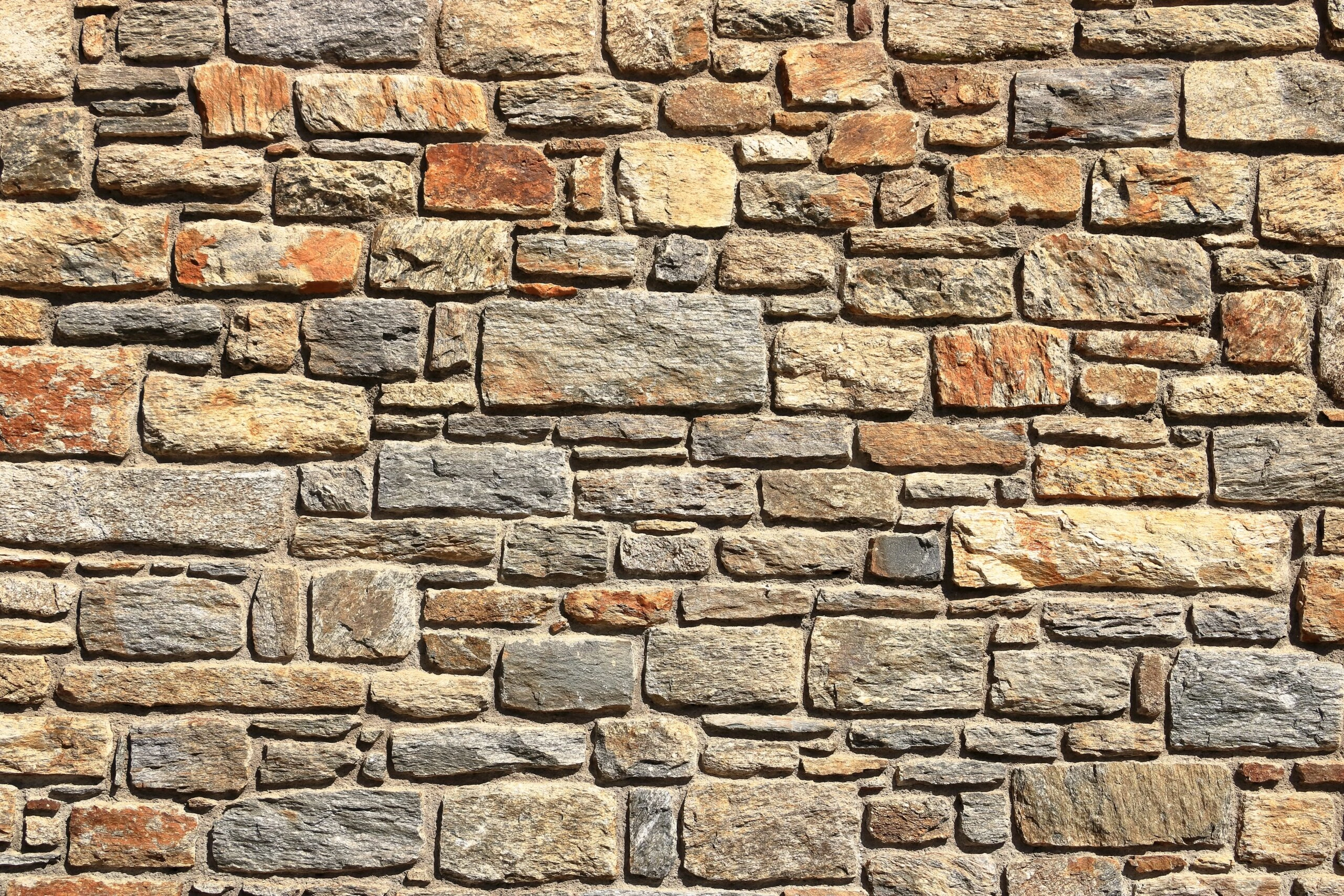
To repair a stone wall, remove loose or damaged stones and clean out old mortar. Mix Type S mortar, the correct choice for Georgia’s exterior stone. Re-bed stones with fresh mortar, repoint all joints, and seal the wall with a penetrating masonry sealer. Minor repairs cost $200–$500; structural repairs run $800–$2,600 or more.
Stone walls are built to last, but Georgia’s heat, humidity, and clay soil put them under constant stress. Cracked mortar, loose stones, and shifting foundations are signs your wall needs attention.
This guide covers exactly how to repair a stone wall, from choosing the right mortar to knowing when to call a professional.
Key Takeaways
- Type S mortar (1,800 PSI) is required for exterior stone in Georgia’s climate, never Type N.
- DIY is viable for minor mortar repointing and re-bedding a few loose stones.
- Leaning walls, horizontal cracks, or walls retaining soil over 4 feet require a licensed mason.
- A penetrating masonry sealer after repair is the single most important long-term protection step.
- Stone wall repair in Georgia costs $200–$10,000+, depending on the severity of the damage and the scope of work.
Why Stone Walls Fail: Understanding the Root Cause
Before picking up a trowel, understand why the damage happened. Fixing a symptom without addressing the root cause means the repair will fail again.
The most common causes of stone wall deterioration in Georgia:
- Mortar deterioration: Standard mortar lasts 25–50 years. Georgia’s heat and humidity accelerate breakdown, leaving joints sandy, cracked, or hollow.
- Water infiltration: Water penetrates micro-cracks, expands during temperature shifts, and forces stones apart over time.
- Soil movement: Georgia’s red clay expands when wet and contracts when dry. This constant movement shifts foundations and displaces stones, especially in retaining walls.
- Tree root pressure: Roots from nearby trees push against wall bases and foundations, slowly destabilizing the structure.
- Poor original construction: Walls built without a proper footing or drainage system fail faster, regardless of the quality of masonry above grade.
Identifying the root cause is step one. A wall failing because of poor drainage needs a drainage solution, not just new mortar.
Tools and Materials You Will Need
Using the right tools prevents costly mistakes and ensures the repair bonds correctly.
Tools Required
- Cold chisel and hammer for removing old mortar from joints
- Angle grinder with masonry blade speeds up removal on larger sections.
- Wire brush and shop vacuum for cleaning joints before re-mortaring
- Margin trowel and pointing trowel for applying and shaping mortar
- Mortar mixing bucket or drill with paddle bit for a consistent mix
- Spray bottle for misting the repair during the curing period.
- Safety glasses and a dust mask, old mortar chips, and silica dust are hazardous.
Materials Required
- Type S mortar mix the correct choice for below-grade and exterior stonework in the Southeast
- Replacement stones match the original: granite, fieldstone, and limestone are common across Georgia.
- Penetrating masonry sealer applied after the repair fully cures
- Backer rod foam is required for cracks wider than 3/4 inch before repointing.
Pro Tip: Why Type S Mortar Is Non-Negotiable in Georgia
Do not use Type N mortar for outdoor stone walls in Georgia. Type N has a compressive strength of only 750 PSI, far too soft for the region’s humidity levels and clay soil movement.
Type S mortar delivers 1,800 PSI compressive strength and significantly higher moisture resistance. It is the correct specification for garden walls, retaining walls, and exterior chimney stonework throughout the Southeast.
How to Repair a Stone Wall with Mortar: Step-by-Step
This process covers mortar joint repair and re-bedding loose stones. If the wall is leaning, bulging, or structurally compromised, stop DIY repairs on damaged structures accelerate failure.
Step 1: Assess the Full Extent of Damage
Walk the entire wall. Tap every stone with a rubber mallet. A hollow sound means the stone has lost its mortar bond. Mark loose stones and failing joints with chalk.
Look specifically for these warning signs:
- Horizontal cracks indicate foundation movement or lateral soil pressure (professional assessment required)
- Bulging or leaning sections, structural failure, not a DIY repair
- Stair-step cracking through mortar joints is common in retaining walls under sustained soil pressure.
Step 2: Remove Old Mortar
Use a cold chisel and hammer to remove deteriorated mortar to a minimum depth of 3/4 inch. For a strong new bond, aim for 1 inch of clean depth.
For large sections, use an angle grinder with a masonry blade. Always wear eye protection, old mortar chips fly fast.
After chiseling, vacuum all joints with a shop vacuum. Dust and debris prevent the new mortar from bonding.
Step 3: Remove and Clean Loose Stones
Pry out any stones that have shifted or lost their bed. Remove them in sequence and set each aside. Reinstallation requires the same orientation.
Scrape the back and sides of each stone with a wire brush. Remove all old mortar residue. The cleaner the stone surface, the stronger the bond.
Step 4: Mix the Mortar Correctly
Mix Type S mortar to a peanut-butter consistency, firm enough to hold its shape, wet enough to spread and bond. Too wet causes shrinkage cracks; too dry causes adhesion failure.
In Georgia’s summer heat, mix smaller batches. Above 85°F, mortar begins to set in 30–45 minutes. Never add water to mortar that has started to stiffen. Discard it and mix a fresh batch.
Step 5: Re-bed the Stones
Apply a 1-inch mortar bed where each stone will sit. Press stones firmly into place, checking for level and alignment with adjacent stones. Remove excess mortar that squeezes out immediately.
For large or heavy stones, butter both the bed and the back of the stone, called a full-bed approach. This eliminates air voids that trap moisture and cause long-term damage.
Step 6: Repoint All Joints
After stones are reset and mortar has firmed (approximately 30 minutes), repoint all joints. Pack fresh mortar firmly into every joint using a pointing trowel, working in layers for deep joints.
Shape each joint with a jointing tool to create a slightly concave (recessed) profile. This directs water away from the joint face, essential in Georgia’s high-rainfall seasons.
Step 7: Cure the Repair and Apply Sealer
Mist the repaired area with water for 3–7 days. Mortar that dries too fast loses compressive strength. In direct Georgia sun, cover the repair with burlap or plastic sheeting to slow the cure rate.
After 28 days (full cure), apply a penetrating masonry sealer to the entire wall face. This is the step most homeowners skip and the most important for long-term durability. A quality sealer can double the life of the repair.
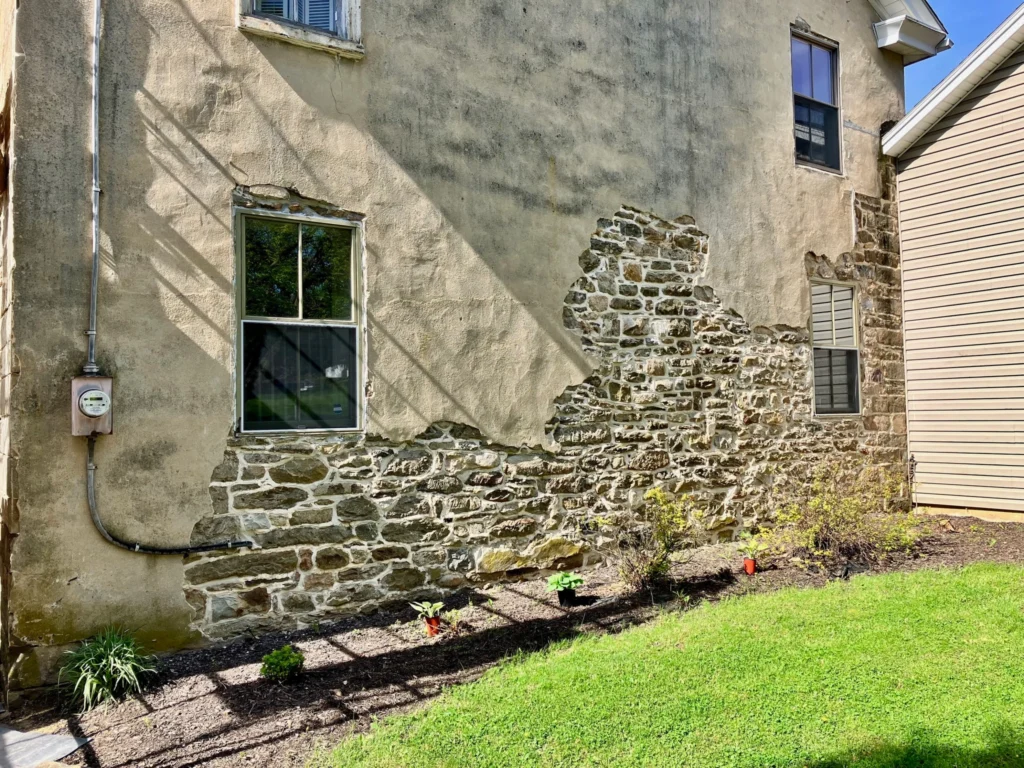
How to Repair Stone Steps
Stone steps endure more stress than walls. Constant foot traffic, water runoff, and soil movement all degrade mortar joints and stone treads. Here is the correct repair process:
- Identify loose or cracked treads. Rock each step by hand. Any movement confirms the mortar bed has failed.
- Remove damaged treads carefully. For treads cracked only at the front nose, repair in place using a stone epoxy filler tinted to match the original stone color.
- Clean the base. Chisel and vacuum all old mortar to at least 3/4 inch depth.
- Inspect the riser stones (vertical faces). If risers have shifted, re-bed them first; treads cannot be secured to unstable risers.
- Re-bed treads with Type S mortar. Slope each tread 1/8 inch per foot toward the front to allow water runoff. Trapped water under a stone tread is the primary cause of repeated failure.
- Repoint all joints around every step edge.
- Allow full cure before foot traffic. Minimum 48 hours for light use; 7 full days for normal traffic.
Important: If stone steps connect to a foundation wall or porch, inspect the adjacent masonry for cracks. Step movement and foundation movement frequently occur together in older Georgia homes.
Stone Restoration: Going Beyond Basic Repair
How to Restore a Stone Wall
Restoration is more comprehensive than a standard repair. The goal is to return the wall to full structural strength, original appearance, and long-term water resistance.
Full stone wall restoration includes:
- Complete repointing of all mortar joints, not only the visibly damaged sections
- Low-pressure cleaning of the entire wall face. Never use high-pressure washing, which destroys soft stone and erodes mortar.
- Replacement of any stones that have spalled, split, or lost structural integrity
- Full application of penetrating masonry sealer once restoration is complete
How to Restore Faded Stone Veneer
Natural and manufactured stone veneer fades due to UV exposure, efflorescence, and accumulated dirt. Restoring faded stone veneer is a three-step process:
- Step 1 Clean: Apply a diluted muriatic acid solution (10:1 water to acid) or commercial masonry cleaner. This removes efflorescence and mineral staining. Always test on a hidden area first.
- Step 2 Rinse and dry: Rinse thoroughly with clean water. Allow at least 24 hours to dry in Georgia’s humidity before proceeding.
- Step 3 Seal: Apply a color-enhancing penetrating sealer. These sealers absorb into the stone surface, restoring depth and richness without creating a shiny, artificial surface appearance.
For manufactured stone veneer panels with severe fading or physical delamination, individual panels can be replaced. A mason can source matching panels and reset them with the correct veneer mortar.
Stone Floor Restoration
Stone floors, travertine, slate, limestone, and bluestone require a specialized restoration process different from wall repair:
- Grinding and honing: Diamond grinding pads remove surface scratches, chips, and uneven lippage between tiles.
- Re-grouting: Old, cracked, or stained grout is removed and replaced with a matching color and formulation.
- Sealing: A penetrating stone floor sealer blocks stain penetration and protects the surface long-term.
Stone floor restoration requires specialized equipment. A professional produces significantly better results than a general tile contractor working without stone-specific tools.
Stone Wall Repair Cost in Georgia: 2026 Price Guide
Costs vary based on damage severity, accessibility, stone type, and whether the problem is structural or cosmetic. These are current average ranges for Georgia homeowners:
Repair Type | Estimated Cost Range |
Minor mortar joint repointing (small section) | $200 – $500 |
Stone wall repointing (full wall, 20 linear ft) | $500 – $1,500 |
Loose stone re-bedding (1–5 stones) | $300 – $700 |
Stone wall repair (moderate damage) | $800 – $2,600 |
Stone step repair (1–3 steps) | $400 – $900 |
Full stone wall restoration | $1,500 – $5,000+ |
Stone veneer restoration | $600 – $2,000 |
Structural wall rebuild (partial or full) | $3,000 – $10,000+ |
Key Factors That Affect Your Final Cost
- Stone type: Natural fieldstone and granite are harder to source and match than manufactured veneer, increasing both material and labor costs.
- Accessibility: Retaining walls on slopes, near structures, or in tight spaces require additional labor time and equipment.
- Structural damage: Foundation issues beneath a wall significantly increase the repair scope and cost.
- Drainage corrections: If drainage failure caused the wall damage, correcting it is a necessary part of the repair, adding to the total project cost.
Note on Pricing
Cost ranges above reflect general Southeast market averages. For an accurate quote on your specific project in Newnan, Marietta, or the greater Georgia area, contact Archer Chimneys & Exteriors for a free, no-obligation on-site assessment.
When to Stop DIYing and Call a Licensed Mason
Minor mortar work is manageable for a careful homeowner. But structural stone wall repairs require professional expertise an incorrect repair on a compromised wall can accelerate failure or cause collapse.
Call a licensed mason immediately if:
- The wall is leaning or bulging outward, indicating foundation failure or soil pressure buildup.
- Horizontal cracks run the length of the wall, a structural stress signal, not surface wear.
- More than 30% of the wall surface shows damage, and widespread deterioration requires a full structural assessment.
- The wall retains soil more than 4 feet high. Lateral soil loads at this depth are not a DIY repair scenario.
- Cracks are active and growing, an ongoing movement that surface repairs will not resolve.
- The foundation condition is unknown; a professional can probe below grade to assess what is actually happening.
Why Choose Archer Chimneys & Exteriors for Stone Wall Repair
Archer Chimneys & Exteriors is a licensed, insured, family-owned chimney and exterior services company. We are based in Newnan, GA, and serve homeowners throughout Coweta County, Marietta, and Asheville, NC.
Here is what separates us from general contractors and national chains:
- Full leak diagnosis. We assess every potential entry point on every visit. You get a complete diagnosis, not a partial fix.
- Level 2 video camera inspections: We inspect the interior of your flue from crown to firebox. We identify damage that is invisible from the outside.
- Chimney and roofing expertise combined: Since chimney leaks often involve both the chimney and the roof, our dual expertise removes the guesswork about where the water originates.
- Licensed and insured: We carry full licensing and liability coverage across all service areas.
- 279+ verified Google reviews: Our reputation is built on honest inspections and accurate repairs for homeowners throughout the Newnan area.
- Inspection fee applied to repairs: Your inspection fee counts toward any repair or service within 30 days. You are paying for real answers.
Conclusion
Knowing how to repair a stone wall correctly means choosing the right mortar, preparing the surface properly, and sealing the repair after curing. For minor mortar work, a careful homeowner with the right tools can produce a durable result.
For structural issues, leaning walls, widespread deterioration, or retaining walls over four feet, a professional assessment is not optional. An incorrect structural repair creates a wall that looks fixed but fails under the next stress cycle.
Whether your project is a garden wall in Newnan, stone steps on your Marietta property, or a chimney facing that needs full restoration, starting with an accurate diagnosis saves money and prevents repeated repairs.
For more updates, expert tips, and customer reviews, follow us on Facebook and Instagram, or visit our Google My Business to see why homeowners trust us.
Contact us today to schedule your inspection or get a free quote.
Frequently Asked Questions: Stone Wall Repair in Georgia
What is the best mortar for repairing a stone wall?
Type S mortar is the correct choice for exterior stone walls in Georgia. It delivers 1,800 PSI compressive strength and superior moisture resistance compared to Type N (750 PSI). For chimney stonework exposed to heat, use a refractory mortar rated for high-temperature applications.
Can I repair a stone wall myself?
Minor mortar repointing and re-bedding a few loose stones are DIY-appropriate with the right tools and materials. Structural repairs, leaning walls, walls retaining significant soil, or walls with active cracking require a licensed mason. Incorrect structural repairs accelerate failure.
How do I know if my stone wall needs to be rebuilt rather than repaired?
If the wall is leaning more than a few degrees, has active horizontal cracks, lacks a proper footing, or shows damage across more than 30% of its surface, rebuilding is typically more cost-effective than repeated repairs. A professional mason can confirm this with an on-site inspection.
How long does a stone wall mortar repair last?
A properly executed repair using Type S mortar, with correct joint depth (minimum 3/4 inch) and a final penetrating sealer, should last 20–30 years in Georgia’s climate. The quality of surface preparation and whether drainage issues were corrected are the primary longevity factors.
How do I repair stone steps?
Remove loose treads, clean the base to 3/4 inch depth, inspect risers first, then re-bed treads with Type S mortar sloped 1/8 inch per foot for drainage. Repoint all joints and allow 7 days before normal foot traffic. Do not use Type N mortar on exterior steps.