
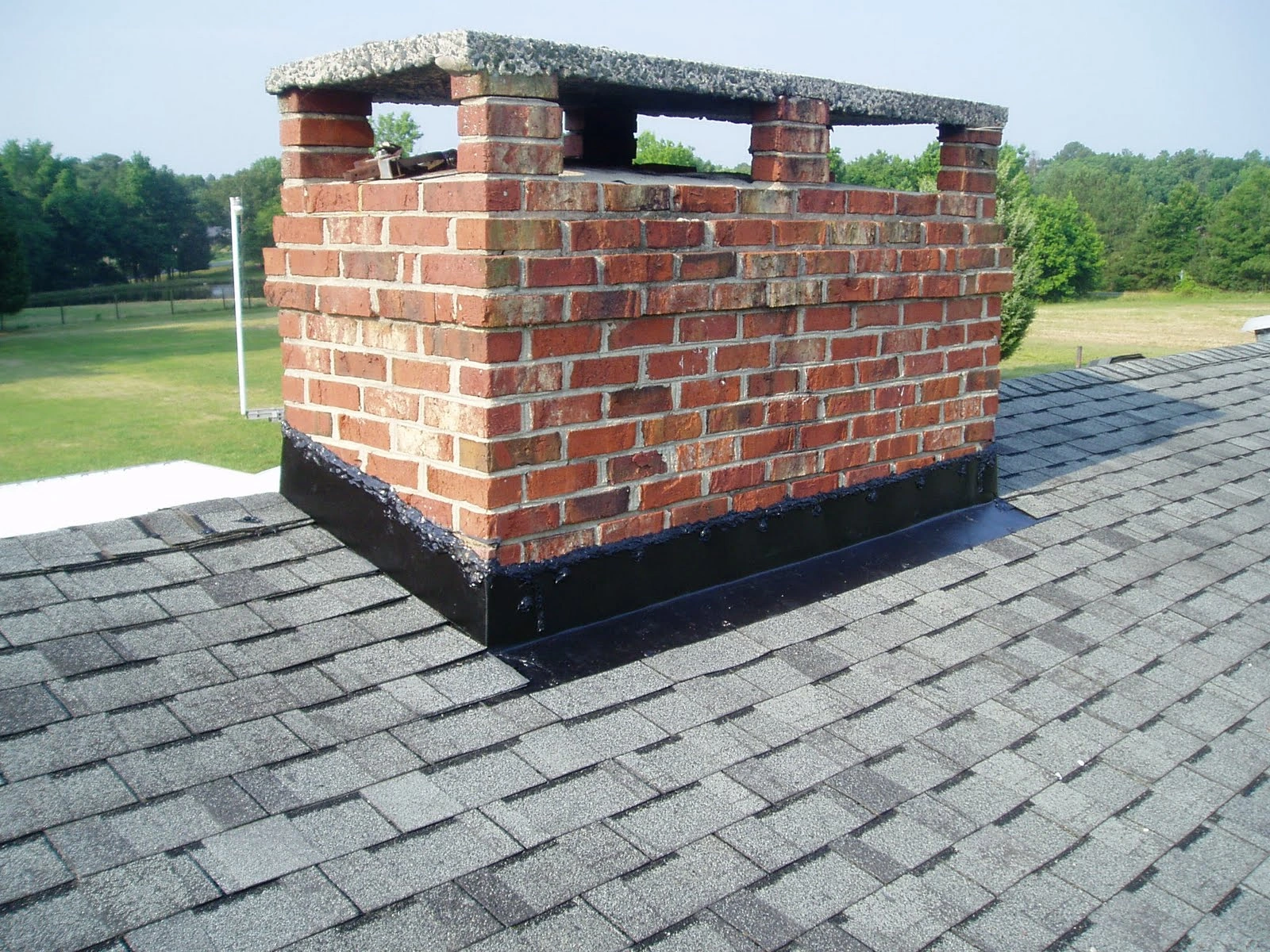
Chimney efflorescence is a white, powdery deposit of mineral salts left behind when water moves through brick and evaporates at the surface. A Level 1 chimney inspection can confirm whether it’s cosmetic or a sign of active water intrusion. Left unaddressed, that same water can cause spalling brick and crumbling mortar over time.
White, chalky stains on your chimney brick are not paint or dirt. They are efflorescence, and they signal that water is moving through your masonry. This guide explains what causes it, when it becomes serious, and how homeowners in Newnan, Marietta, and Asheville can fix it.
What Is Chimney Efflorescence?
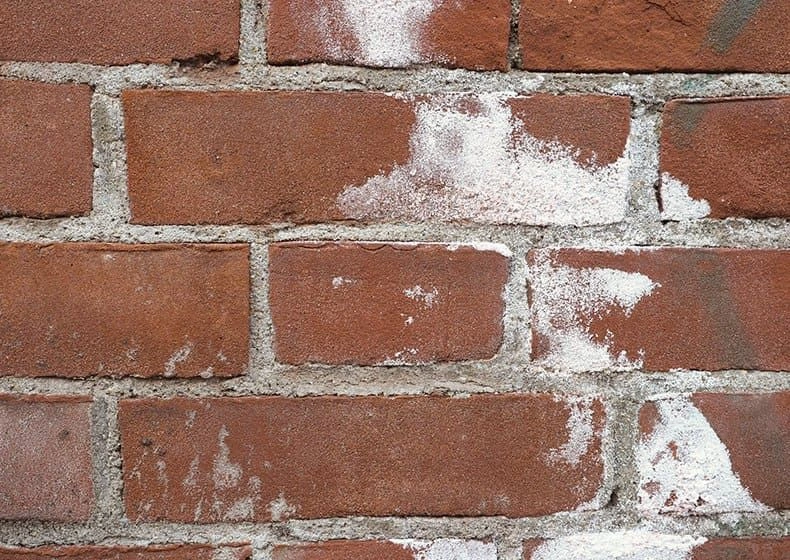
Brick is porous. It absorbs rainwater through thousands of tiny channels every time it storms. Buried inside that brick and mortar are natural mineral salts, mostly calcium carbonate. As absorbed water travels back toward the surface and evaporates, it leaves those salts behind.
That crystallized salt residue is what you see. It is the salt, not the water that carried it there. The staining itself will not hurt you. It also will not go away on its own if the water source stays open.
Where Efflorescence Salts Come From
- Calcium carbonate naturally present in brick and mortar
- Portland cement used in modern mortar mixes
- Groundwater or soil salts wicked up from the foundation
- Residual salts left over from original construction
Why Georgia and Western North Carolina Chimneys Are Prone to It
Newnan, Marietta, and Asheville homes face humid summers and repeated winter freeze-thaw cycles. Trapped water expands as it freezes inside brick pores. That expansion pushes more salt toward the surface with every cycle.
Homes built before 1980 often have older mortar that absorbs water faster, so the white staining tends to appear sooner.
Cosmetic Staining or a Chronic Water Problem?
Not every white stain means a serious issue. A single flush after an unusually wet season can be mostly cosmetic.
Recurring white staining is different. It means water keeps finding the same path into your masonry.
Warning Signs Beyond the White Staining
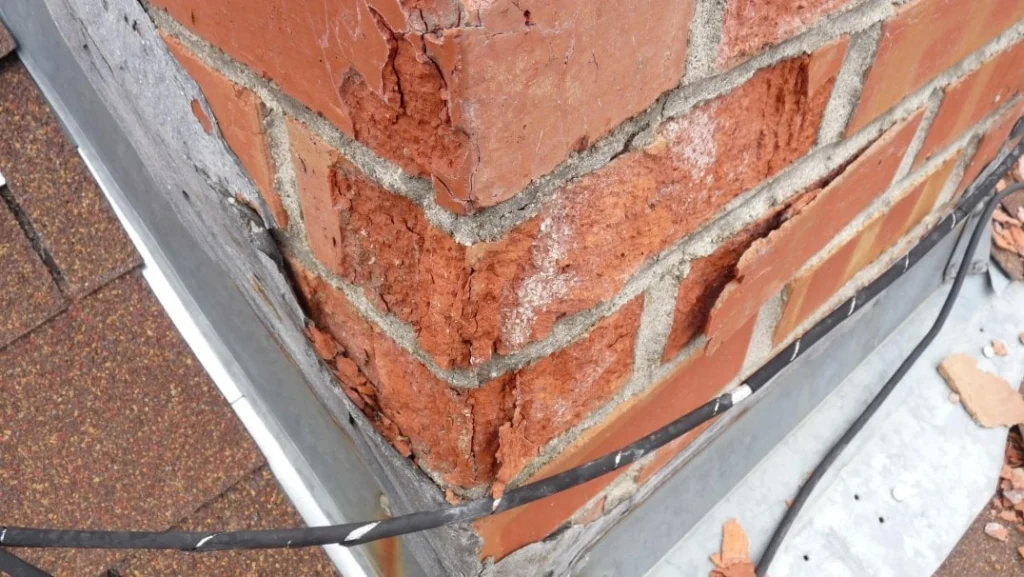
- Spalling brick: the face flakes, chips, or pops off in pieces
- Crumbling mortar joints you can scrape out with a fingernail
- Damp or stained interior walls near the fireplace
- White deposits inside the firebox itself
- Visible cracks in the chimney crown
- Rust stains below the roofline flashing
- A musty smell near the fireplace after rain
What Lets Water Into Your Chimney
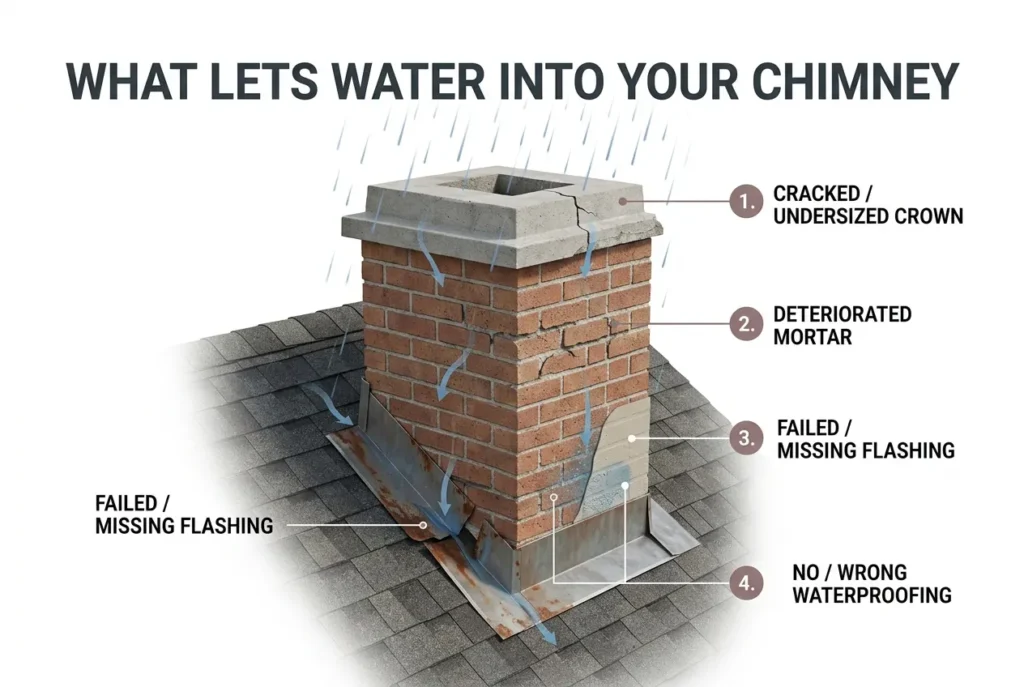
This staining does not appear on a chimney shedding water correctly. One of four issues is usually responsible.
1. A Cracked or Undersized Chimney Crown
The crown caps the masonry and should shed rain away from the brick. A crack, or a missing drip edge, sends water straight down the joints instead. Archer’s chimney crown repair and waterproofing service addresses this at the source.
2. Deteriorated Mortar Joints
Mortar wears out before brick does. Eroded joints collect water rather than shedding it, creating a direct path into the wall. Tuckpointing restores those joints with fresh, properly packed mortar.
3. Failed or Missing Flashing
Flashing seals the joint between chimney and roof. Rusted or pulled-away flashing lets water soak in from below, often out of sight.
4. No Waterproofing, or the Wrong Product
A breathable chimney waterproofing sealer lets moisture escape while blocking rain. Paint or elastomeric coatings trap water inside instead, making the damage worse.
How to Remove Efflorescence From Brick
Cleaning is simple, but the order matters more than the method.
- Dry brush light deposits with a stiff, natural-bristle brush
- Use a diluted white vinegar solution for heavier calcium-based staining
- Reserve muriatic acid for severe cases only, with proper dilution and protective gear
- Avoid pressure washing, which drives water deeper into masonry
Clean only after the water source has been repaired. For chimneys that need a lasting fix rather than a quick scrub, professional masonry sealing applied after the repair keeps the stain from coming back.
Efflorescence Repair Cost & Factors
Repair cost depends on how far water damage has progressed before it is caught. For a detailed breakdown, see Archer’s repointing cost guide for Georgia homes.
- Cleaning and diagnostic inspection: about $150 to $350
- Spot tuckpointing of mortar joints: about $300 to $1,200
- Chimney crown repair or replacement: about $150 to $3,000
- Breathable masonry waterproofing: about $300 to $800
- Reflashing at the roofline: about $300 to $1,500
- Spalled brick replacement, often paired with brick and mortar crack repair: priced per square foot of affected surface
- Full chimney rebuild in severe cases: $5,000 or more
Height, access, brick age, and how many components are affected all influence the final price. Catching the problem early is consistently the cheaper path.
Why Choose Archer Chimneys & Exteriors
Archer Chimneys & Exteriors is a licensed, insured, family-owned chimney and exterior services company. We are based in Newnan, GA, and serve homeowners throughout Coweta County, Marietta, and Asheville, NC.
Here is what separates us from general contractors and national chains:
- Full leak diagnosis. We assess every potential entry point on every visit. You get a complete diagnosis, not a partial fix.
- Level 2 video camera inspections: We inspect the interior of your flue from the crown to the firebox. We identify damage that is invisible from the outside.
- Chimney and roofing expertise combined: Since chimney leaks often involve both the chimney and the roof, our dual expertise removes the guesswork about where the water originates.
- Licensed and insured: We carry full licensing and liability coverage across all service areas.
- 279+ verified Google reviews: Our reputation is built on honest inspections and accurate repairs for homeowners throughout the Newnan area.
- Inspection fee applied to repairs: Your inspection fee counts toward any repair or service within 30 days. You are paying for real answers.
Conclusion: Protect Your Chimney Before the Next Freeze-Thaw Season
White chimney staining is an early warning, not a final verdict. It shows up before spalling, before crumbling mortar, and before interior water damage. Fix the entry point first, repair any existing damage, then apply a breathable sealer. Skipping straight to the sealer traps in water that is already there.
If you have noticed chimney efflorescence, schedule a $149 Level 1 inspection with Archer Chimneys & Exteriors across Newnan, Marietta, and Asheville to identify the cause before it becomes a bigger repair.
For more updates, expert tips, and customer reviews, follow us on Facebook and Instagram, or visit our Google Business Profile to see why homeowners trust us.
Contact us today to schedule your inspection or get a free quote.
Frequently Asked Questions
What does efflorescence mean on a chimney?
Efflorescence on a chimney means water is moving through the brick and mortar, leaving mineral salts behind as it evaporates. It is a visible sign of moisture, not physical damage by itself.
Is chimney efflorescence dangerous?
The staining itself is not dangerous or structural. It becomes a concern only if the water causing it is left unaddressed long enough to damage brick and mortar.
What causes white stains on chimney brick?
White stains on chimney brick are caused by water carrying mineral salts, mainly calcium carbonate, out of the masonry as it evaporates at the surface.
Can I remove efflorescence myself?
Yes, light efflorescence can be removed with a stiff brush or a diluted vinegar solution. Fixing the water source first prevents the stain from returning.
Does pressure washing remove efflorescence?
Pressure washing removes the visible stain but pushes water deeper into the brick, which can worsen mortar damage. It is not recommended for chimney masonry.