
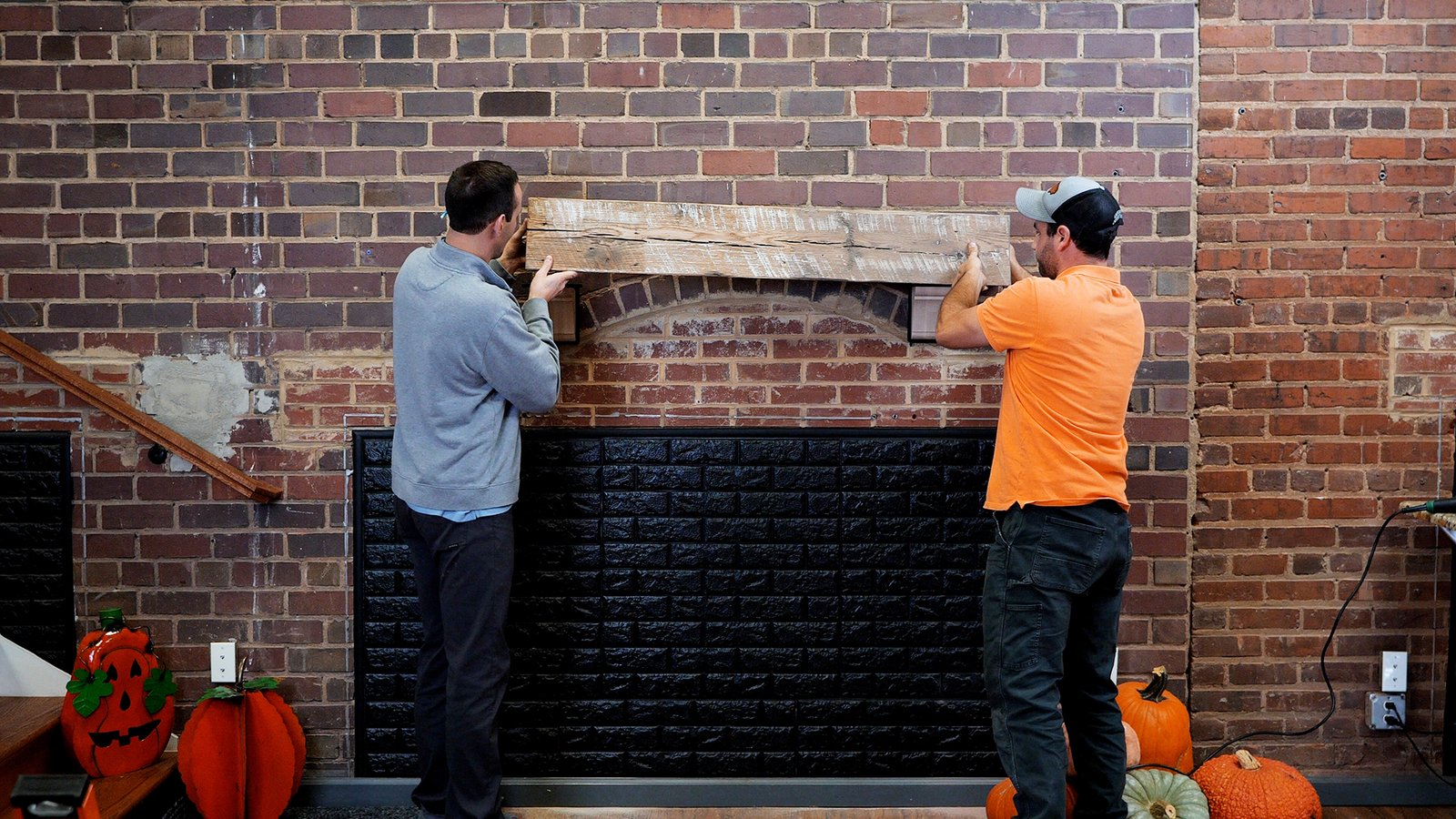
Installing a mantel can completely transform the look of your brick fireplace, adding character, warmth, and a clear focal point to your living space. Many homeowners attempt this project themselves, but working with brick requires the right tools, proper measurements, and careful planning. Mistakes can damage masonry or lead to unsafe installations.
If you’re planning how to install a mantel on a brick fireplace, this guide walks you through every step from choosing the right materials to securing the mantel properly and finishing it with confidence. For homeowners who want expert support and long-term safety, Archer Chimneys & Exteriors offers professional fireplace services to ensure your mantel is installed correctly, securely, and up to code.
What You’ll Learn in This Fireplace Installation Guide
This guide is designed for homeowners who want a clear, safe approach to installing a mantel on a brick fireplace. Inside, you’ll learn:
- Different types of mantels and which styles work best for brick fireplaces
- Materials suitable for brick fireplace installations
- Tools and anchors required for secure brick mounting
- A step-by-step installation process from start to finish
- Measuring and levelling techniques for a professional look
- Safety tips, code considerations, and clearance requirements
- Common mistakes to avoid during DIY fireplace mantel installation
- Finishing and styling tips to enhance your fireplace
- When professional fireplace services may be the better choice
Why Proper Mantel Installation Matters for Your Fireplace
A fireplace mantel is not just decorative it must be properly secured to support weight and withstand heat exposure. Brick fireplaces require special anchors and drilling techniques to avoid cracking the masonry or weakening the structure.
An improperly installed mantel can loosen over time, become a safety hazard, or violate local fire codes related to clearance from the firebox. Taking the time to follow correct installation steps protects both your home and your investment while ensuring your fireplace remains safe and functional.
Different Types of Mantels
Choosing the right mantel style is the first step before installation, as each type has different mounting and clearance requirements.
- Wood mantels are the most popular choice due to their versatility and classic appearance. They work well in both traditional and modern homes, but must meet proper clearance requirements from the firebox to remain safe.
- Floating mantels create a clean, modern look and typically use hidden mounting brackets anchored directly into brick. These designs require precise measurements and strong anchors to support the weight safely.
- Stone or concrete mantels offer a bold and highly durable option. Because they are significantly heavier, they often require professional installation to handle the weight and complex mounting process.
Reclaimed wood mantels provide rustic charm and unique character. However, they should be properly sealed to protect against heat exposure and moisture over time.
Materials Suitable for Brick Fireplaces
Brick fireplaces demand materials that can handle heat, weight, and long-term structural stability.
- Solid hardwood is durable and visually appealing but must be installed with proper clearance from the firebox.
- Engineered wood is lighter and easier to mount, making it a popular DIY option, as long as it is rated for fireplace use.
- Metal mounting brackets and steel support rods are commonly used in brick fireplace mantel installation to ensure a secure and long-lasting connection.
Avoid lightweight decorative materials not designed for masonry mounting, as they may loosen or fail over time.
Tools and Anchors Required for Brick Mounting
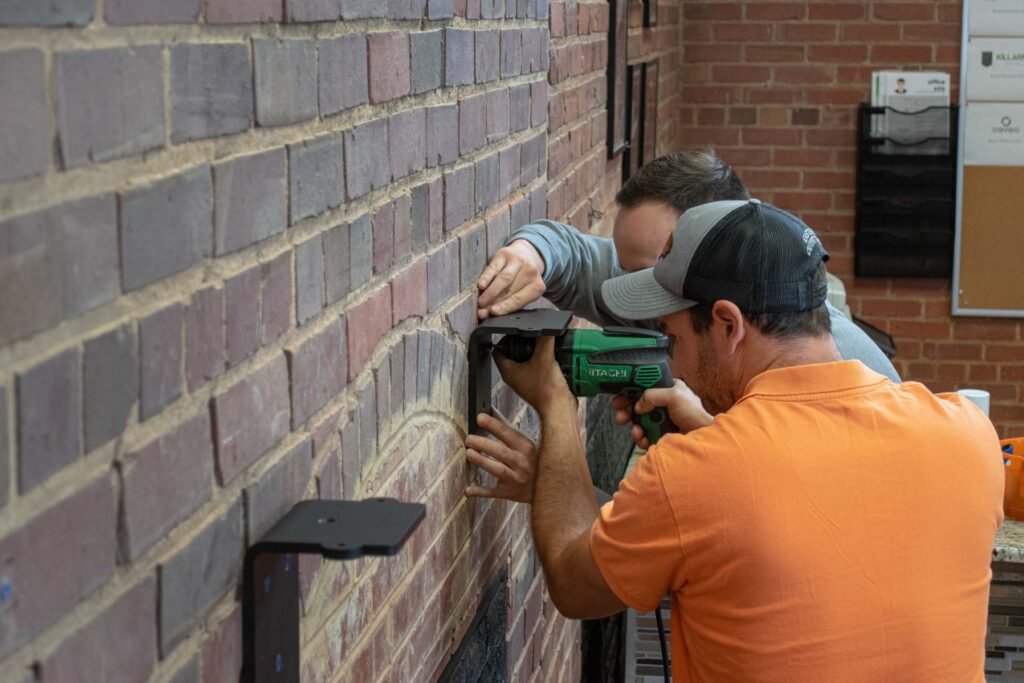
Installing a mantel on brick requires specialised tools to ensure accuracy and safety.
- Hammer drill with masonry drill bits
- Level and measuring tape
- Socket wrench or impact driver
For anchoring, commonly used options include:
- Masonry screws
- Sleeve anchors
- Expansion anchors
Hidden bracket systems are especially popular for floating mantels, as they provide strong internal support while keeping the hardware invisible. Using the correct anchors is critical; standard wood screws alone are not sufficient for brick surfaces.
Step-by-Step Installation Process
A proper installation process ensures your mantel is secure, level, and compliant with safety standards. Following each step carefully also helps prevent unnecessary damage to the brick surface and mounting hardware.
- Marking the Mantel Height: Begin by marking the desired mantel height on the brick surface. Make sure the placement meets local fire safety clearance requirements. Use the firebox opening as your main reference point.
- Drawing the Reference Line: Use a level to draw a straight reference line across the brick. This line ensures the mantel sits evenly once installed. Double-check alignment before drilling any holes.
- Drilling Pilot Holes: Drill pilot holes into the brick using a masonry drill bit. Keep the depth and spacing consistent for proper anchor support. Avoid drilling into mortar joints for maximum strength.
- Installing the Mounting Bracket: Secure the mounting bracket or ledger board to the brick. Use appropriate masonry anchors based on mantel weight. Ensure the bracket is firmly attached before proceeding.
- Mounting the Mantel: Carefully slide or mount the mantel onto the support system. Check that it fits snugly and aligns with the reference line. Make small adjustments if necessary before tightening.
Final Tightening and Alignment Check Once your mantel is mounted, tighten all fasteners securely to ensure stability. Recheck level alignment across the entire mantel length to guarantee it sits perfectly. Following these steps properly is essential for installing a mantel on a brick fireplace safely, ensuring the finish looks clean, stable, and professional.
Measuring and Levelling Techniques
Accurate measuring and levelling are key to achieving a polished, professional-looking mantel installation. Small errors can become very noticeable on exposed brick.
- Always measure from the firebox opening rather than the floor, as floors are not always perfectly level.
- Use a long level to confirm horizontal alignment across the entire mantel length.
- Double-check spacing on both sides of the mantel to ensure symmetry and balance.
- Take your time with measurements, as even minor misalignment can make the mantel appear crooked.
Safety Tips and Code Considerations
Fireplace mantels must be installed with safety and building codes in mind, especially when the fireplace is functional.
- Follow local building codes and fire safety standards for proper mantel clearance.
- Anchor heavier mantels directly into brick instead of mortar joints for maximum strength.
- Use heat-rated and fireplace-approved materials near the firebox.
- When unsure, consult a professional fireplace service provider to ensure long-term safety and compliance.
Common mistakes to avoid during DIY Fireplace Mantel Installation
Many DIY issues happen due to rushing or overlooking basic installation rules. Being aware of common mistakes can save time and costly repairs.
- Drilling into the mortar instead of the brick, which weakens the mounting point.
- Underestimating the mantle weight and choosing anchors that are not strong enough.
- Skipping levelling steps results in an uneven or slanted mantel.
- Ignoring clearance requirements, which can create serious fire hazards.
- Rushing the process and causing visible brick damage that is difficult to fix.
Finishing and styling tips to enhance your Fireplace
Finishing touches help protect your mantel and enhance the overall appearance of your fireplace.
- Seal or stain wood mantels to improve durability and resistance to heat and moisture.
- Choose heat-safe décor items such as ceramic pieces, metal frames, or simple accessories.
- Keep the décor balanced and uncluttered to maintain the mantel as a focal point.
- Avoid overcrowding the mantel, especially on active fireplaces.
DIY vs. Professional Installation Considerations
While DIY installation works for some homeowners, professional help is often the safer option for complex projects.
- DIY installation is best for lightweight mantels and those comfortable with masonry drilling.
- Floating mantels, heavy materials, or historic brick fireplaces often require professional expertise.
- Professional fireplace services ensure proper anchoring, code compliance, and long-term durability.
- Hiring experts can help prevent costly mistakes when working with older or delicate masonry.
Why Homeowners & Businesses Trust Archer Chimneys & Exteriors?
Archer Chimneys & Exteriors is a fully licensed and reputable contractor specialising in fireplaces, chimneys, and home heating solutions. They proudly serve homeowners and businesses throughout Newnan, Marietta, and surrounding areas, delivering professional, safe, and long-lasting solutions.
- Licensed, insured, and experienced with hundreds of fireplace, chimney, and heating projects
- Experts in durable, safe, and efficient gas fireplaces, venting systems, and chimney repairs
- Complete services: fireplace installation, replacement, inspection, maintenance, and gas line work
- Serving homes, offices, and commercial properties throughout Georgia
- Honest, transparent, and customer-first service approach
- Solutions designed to meet safety codes, maximise efficiency, and enhance comfort and value.
Conclusion
Installing a mantel on a brick fireplace can greatly enhance both the style and value of your home when done correctly. Understanding how to install a mantel on a brick fireplace, from choosing the right materials to following proper safety and mounting techniques, is essential for long-term durability. While many homeowners can handle basic installations, heavier or floating mantels often require professional expertise. Taking the right approach ensures your fireplace remains safe, functional, and visually appealing for years to come. For more updates, expert tips, and customer reviews, follow us on Facebook and Instagram, or visit our GMB to see why homeowners trust us.
Contact us today to schedule your inspection or get a free quote
FAQs
How do I know if my brick fireplace can support a mantel?
Most brick fireplaces can support a mantel if proper anchors and mounting brackets are used. Heavier mantels may require professional assessment for safety.
What is the best height to install a mantel above a fireplace?
Mantel height depends on firebox size and local code requirements. Generally, mantels are installed 12–18 inches above the opening.
Can I drill into brick myself for mantel installation?
Yes, with the right tools like a hammer drill and masonry bits. However, drilling into brick requires precision to avoid cracking or weak mounting.
Should I drill into brick or mortar for mounting?
You should always drill into brick, not mortar. Brick provides stronger and more secure anchor support.
What anchors are best for brick fireplace mantel installation?
Masonry screws, sleeve anchors, and expansion anchors are commonly used. The choice depends on mantle weight and bracket type.